The Longest Gap
20-21-22-23 December 2022 at Aros Art Museum, Aarhus, Denmark
Concept and direction: Mirko Guido
Choreography assistant: Naya Moll Olsen
Originally performed by: Karen Lambæk Christensen, Mirko Guido, Sofie Hub, Helene Düring Kjær, Naya Moll Olsen
Supported by: ARoS Art Museum and Aarhus Municipality
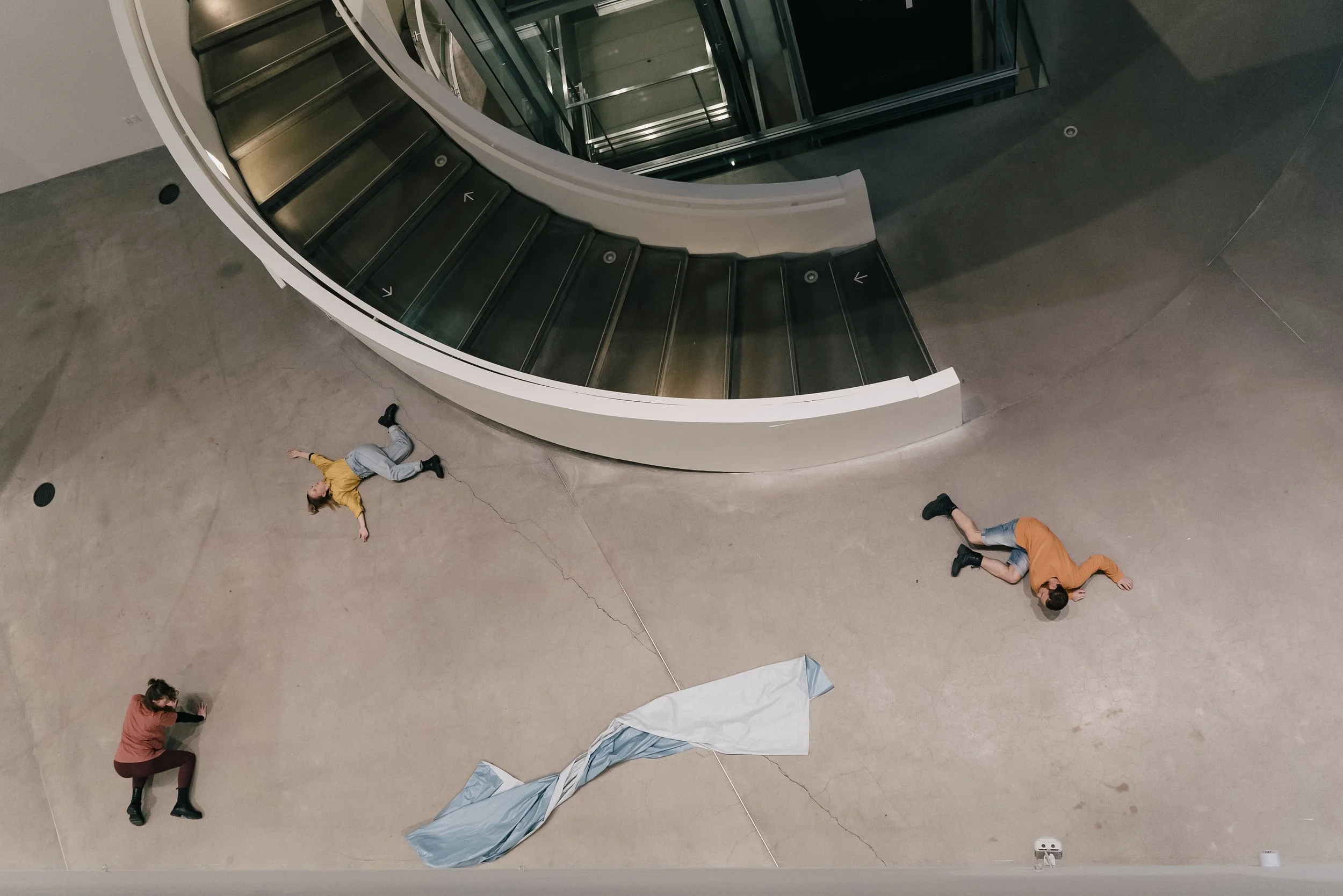
The Longest Gap was developed during a month-long artistic residency at ARoS Art Museum in Aarhus, Denmark, and first performed there in December 2022. This choreographic work evolves from a practice of shifting spaces of attention and presence, unfolding as an investigation into the relationship between the visitors’ gaze and the performing bodies within the museum context.
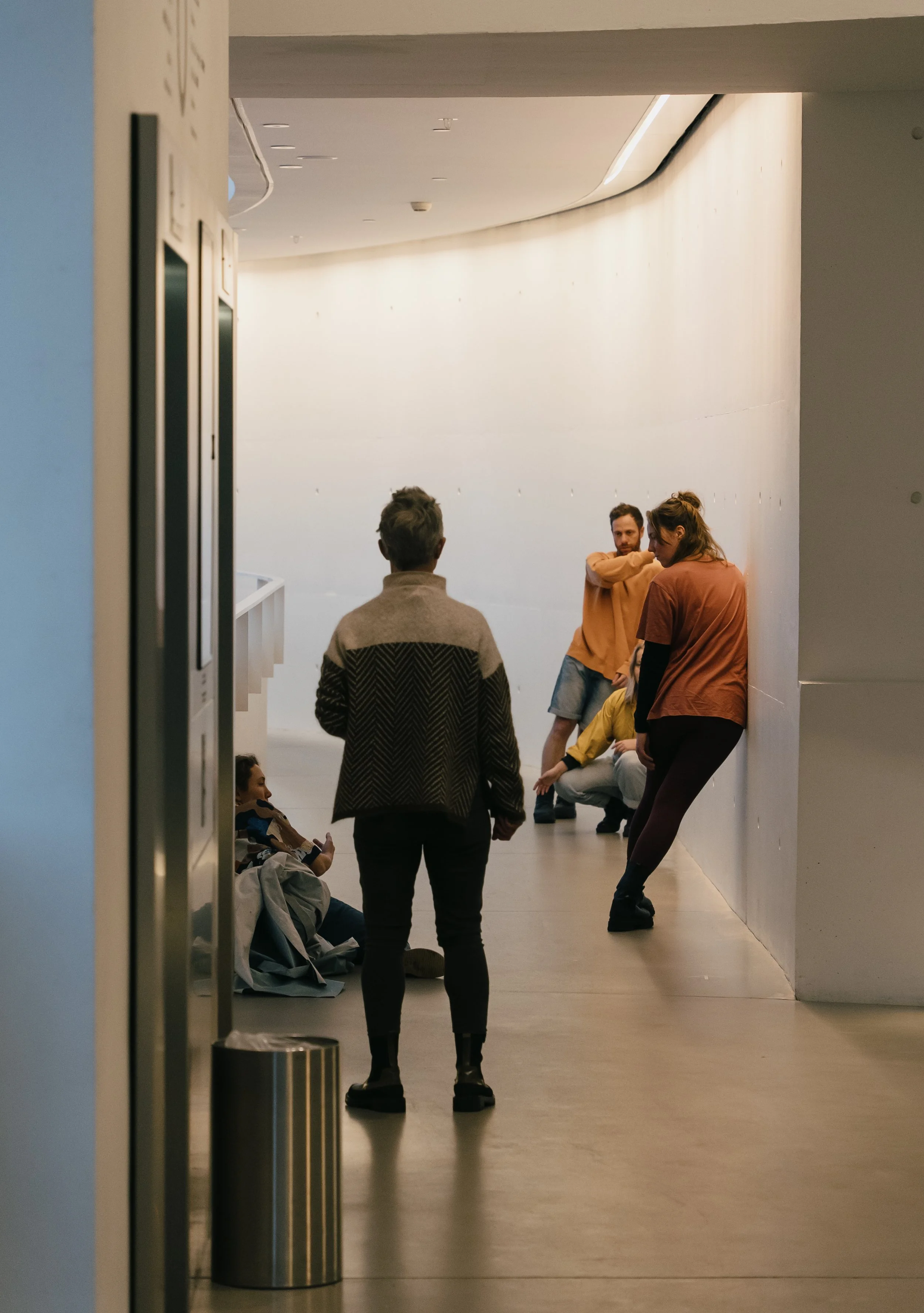
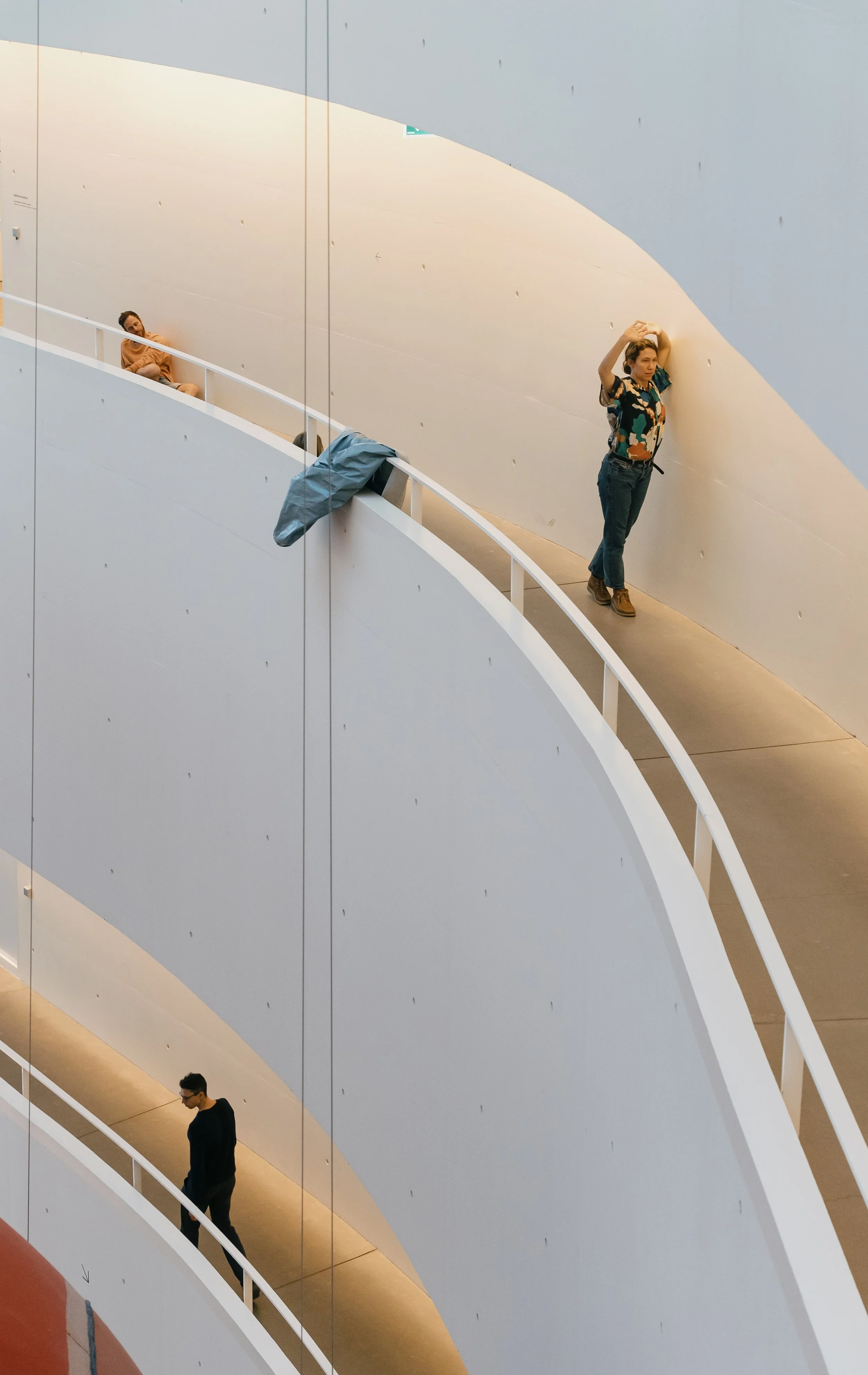
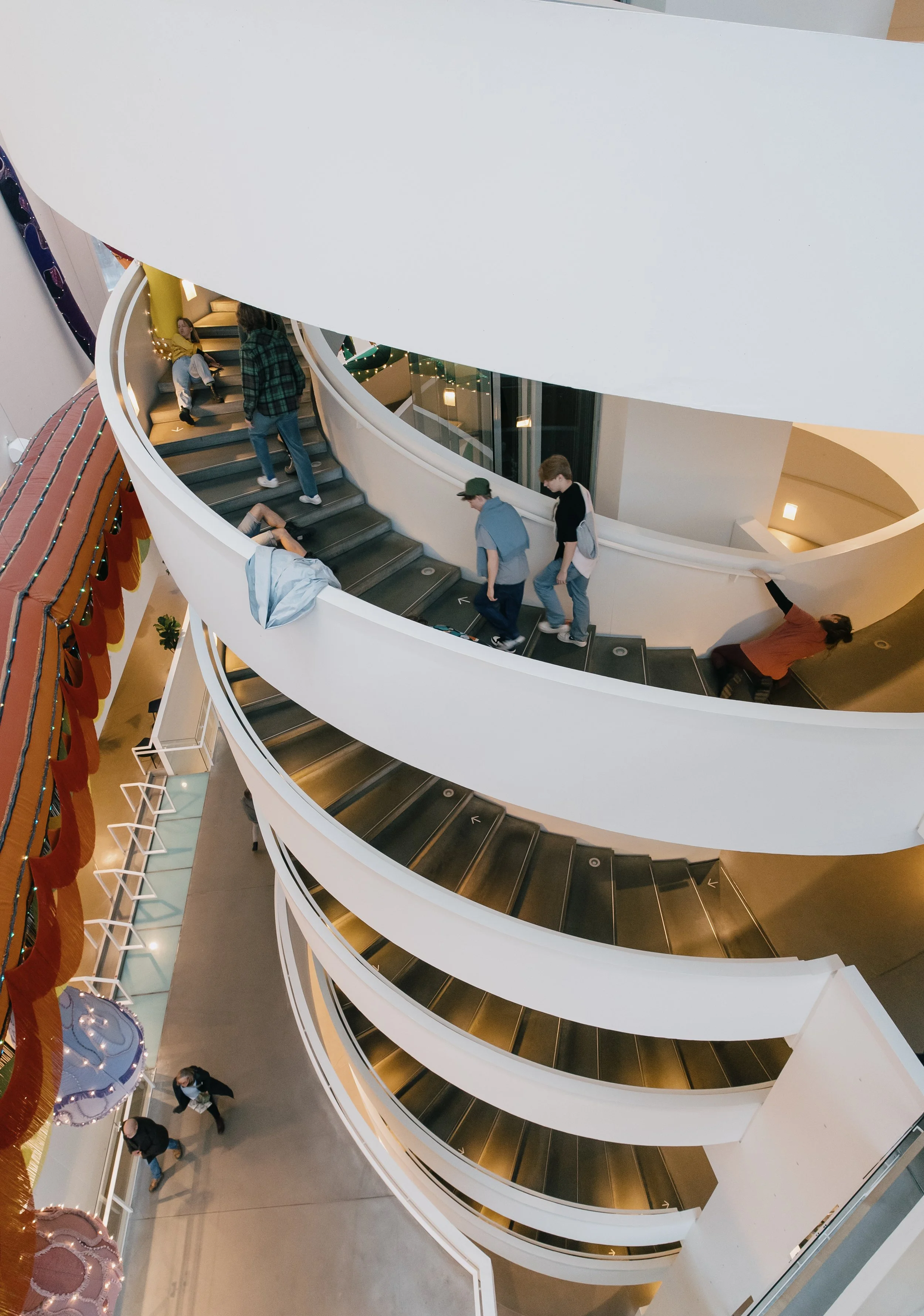
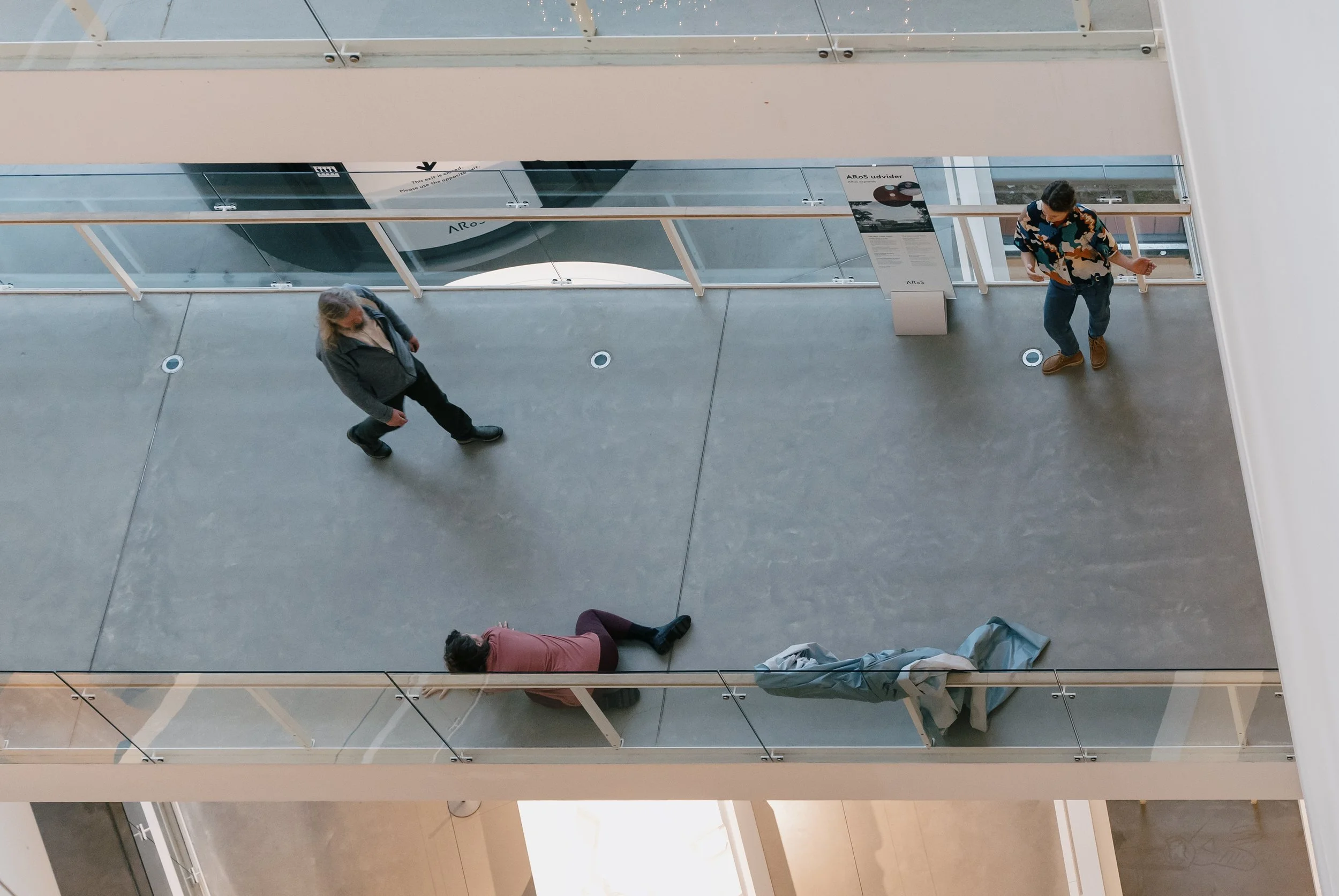
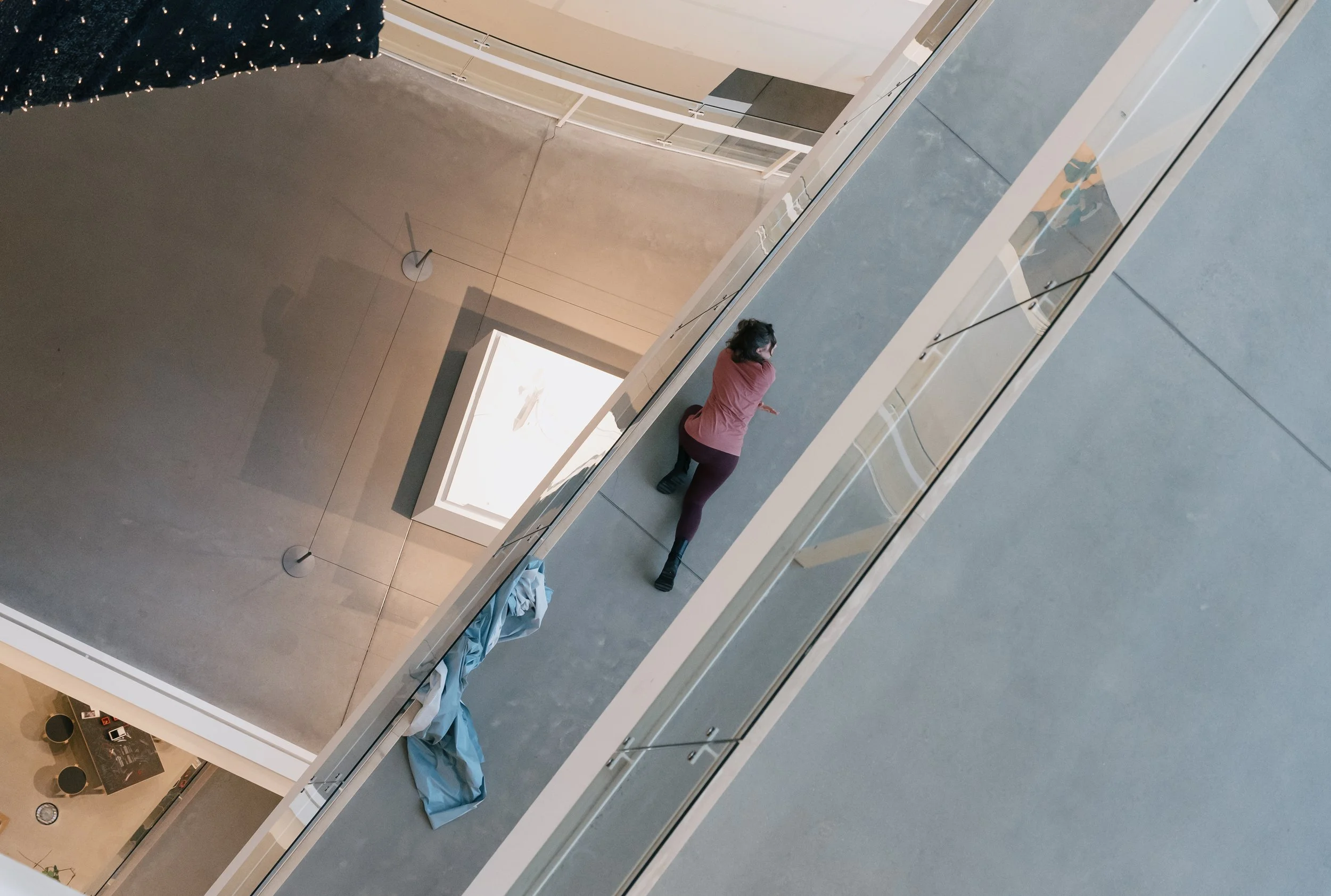
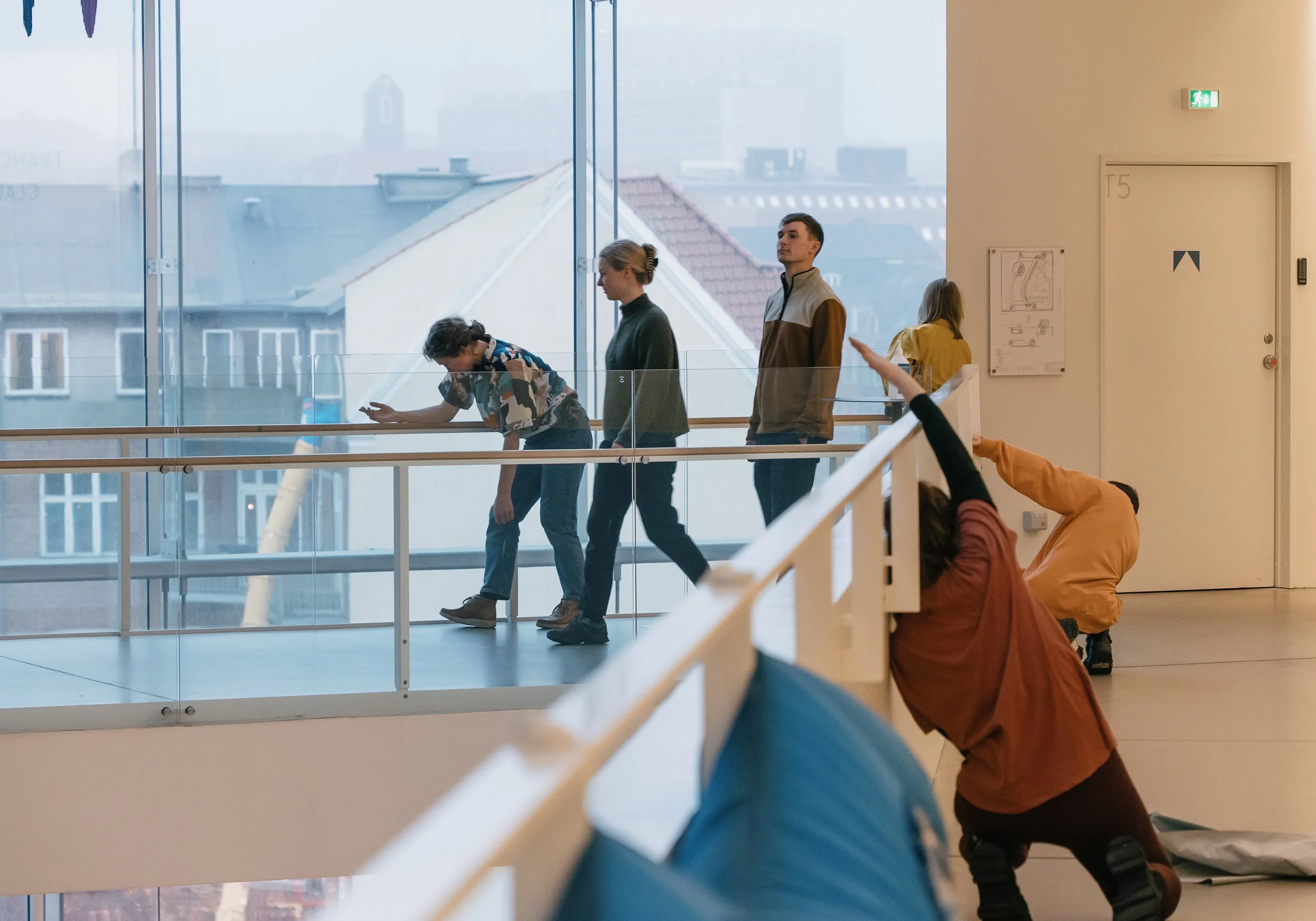
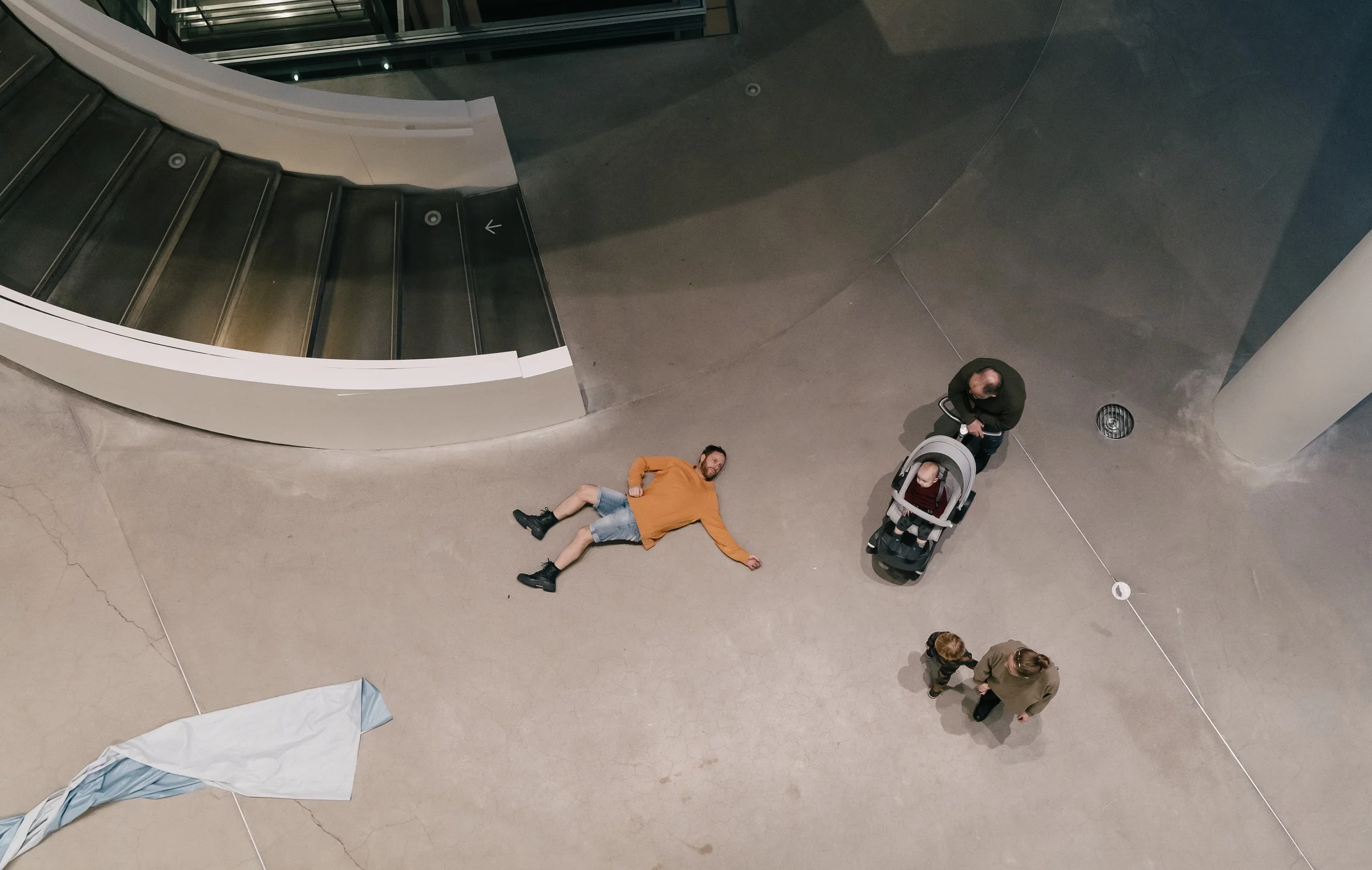
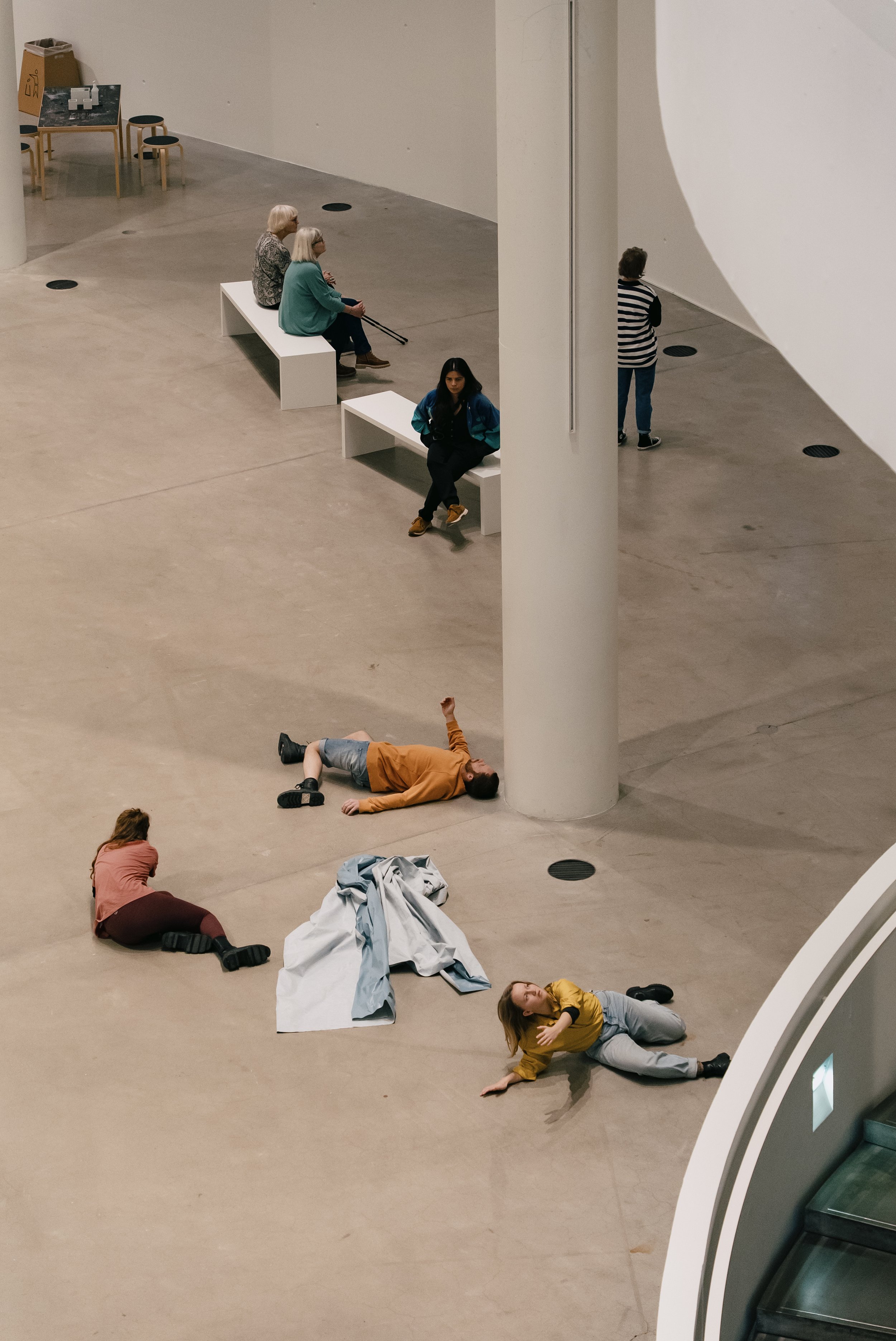
Developed as a durational performance, the choreographic work takes place in the museum’s intermediate spaces — hallways, corridors, staircases, and other transitional areas that are not typically the primary focus of attention. These are spaces where people tend to pass through rather than linger, often overlooked in favour of more central or curated exhibition zones. By embedding the ´performing body´ seamlessly into the flow of the museum, the work positions itself as an event of persistence instead of permanence, whereby the ´object´ is transformed into an ephemeral experience of proximities and assemblages.
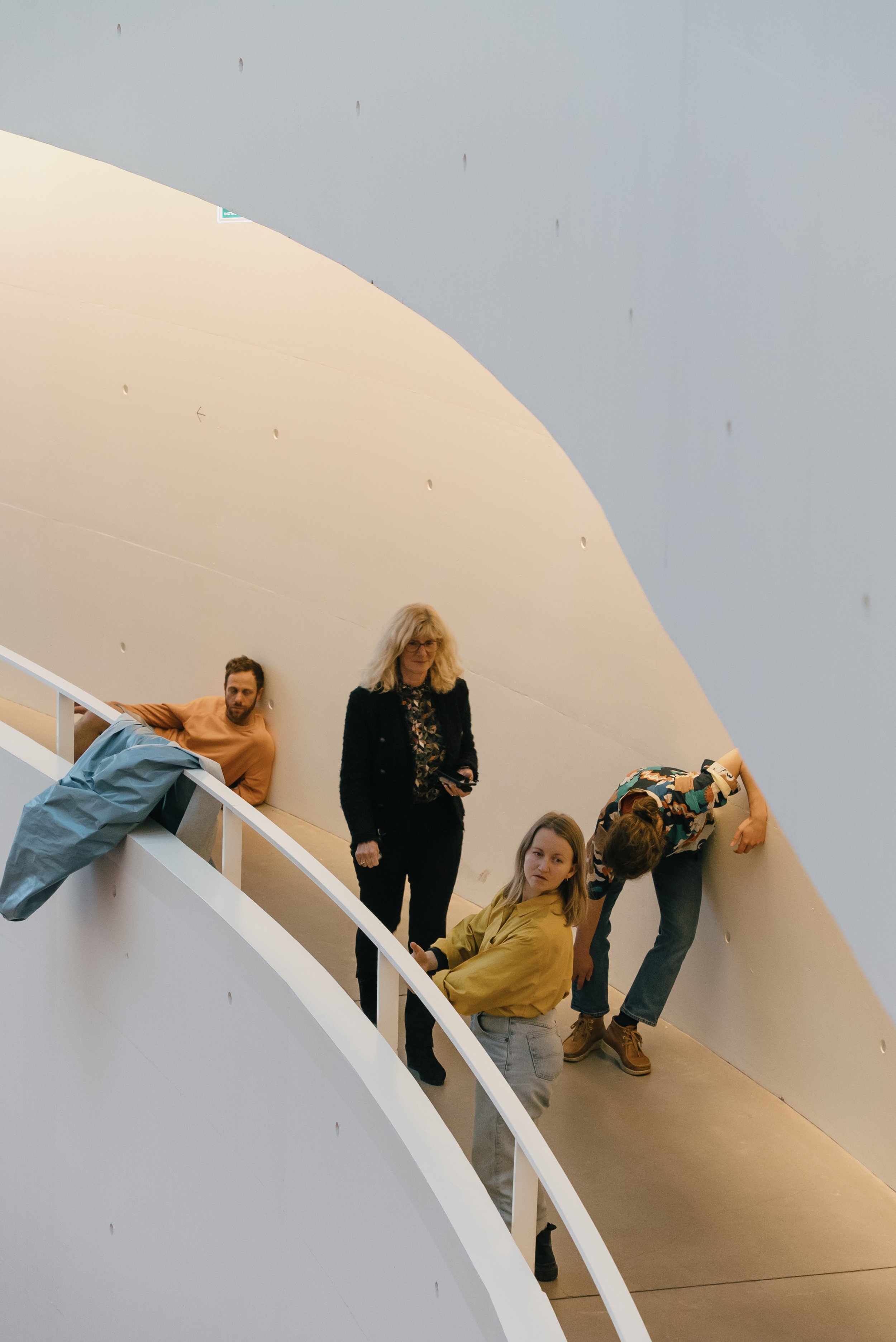
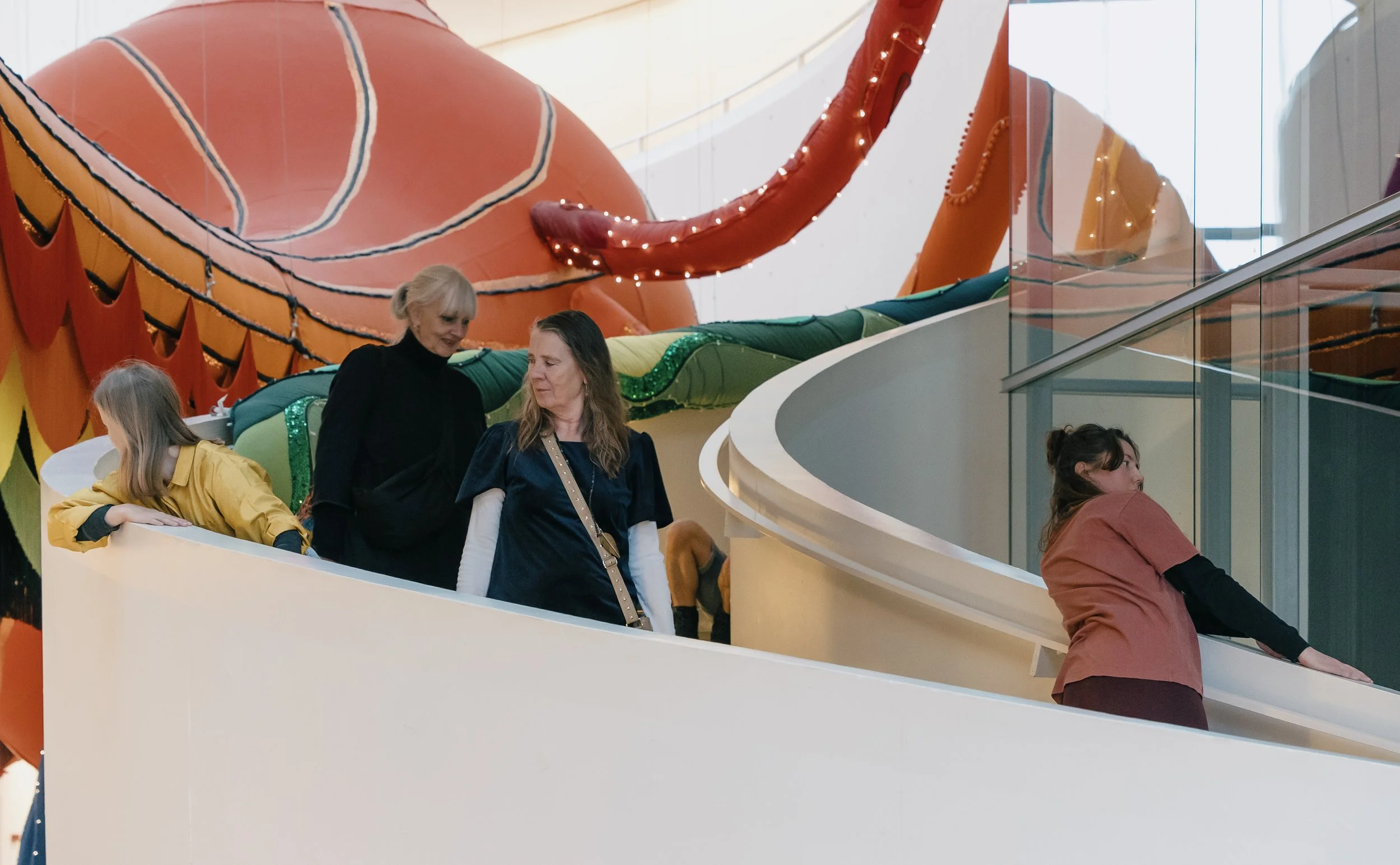
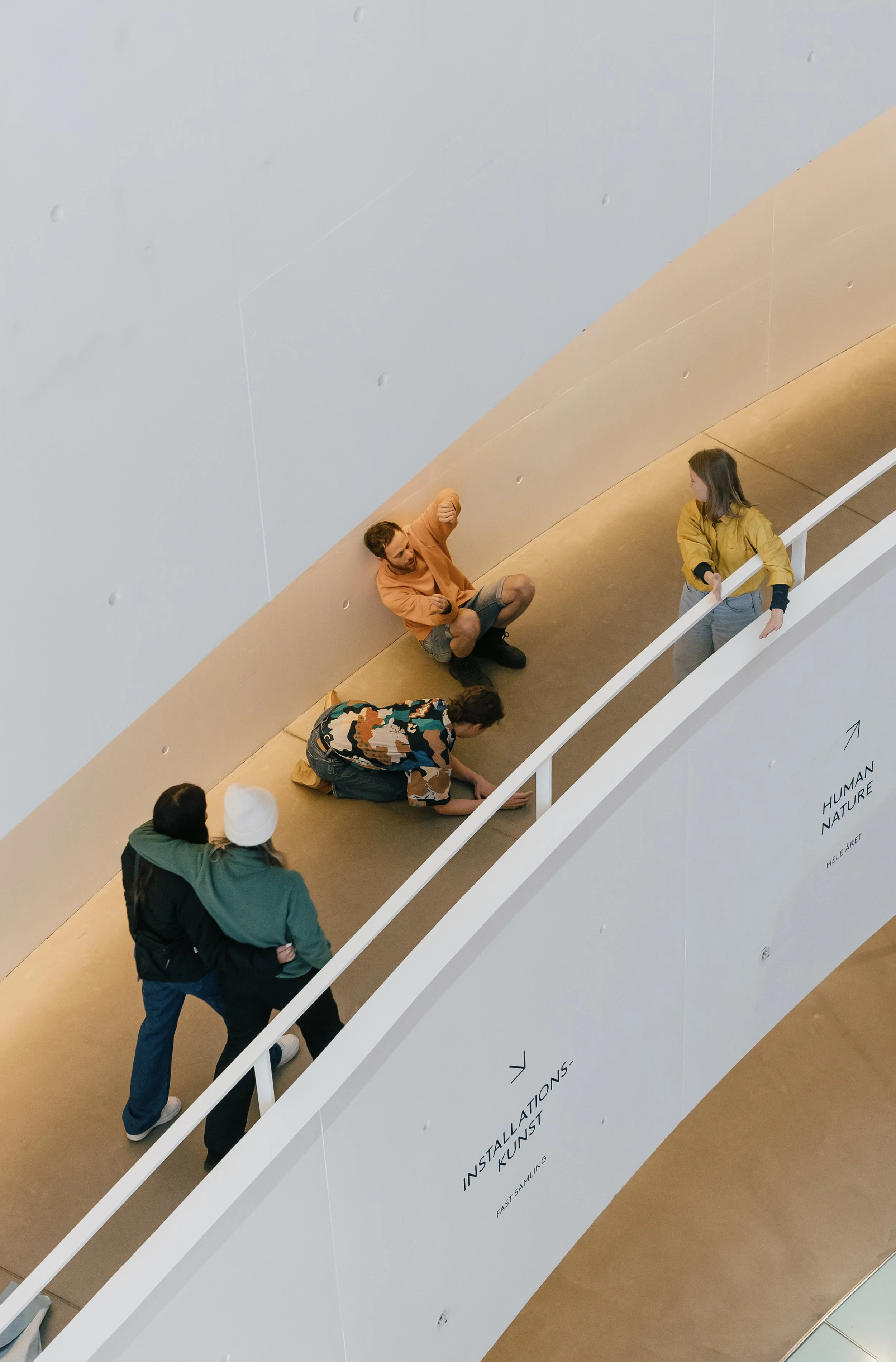
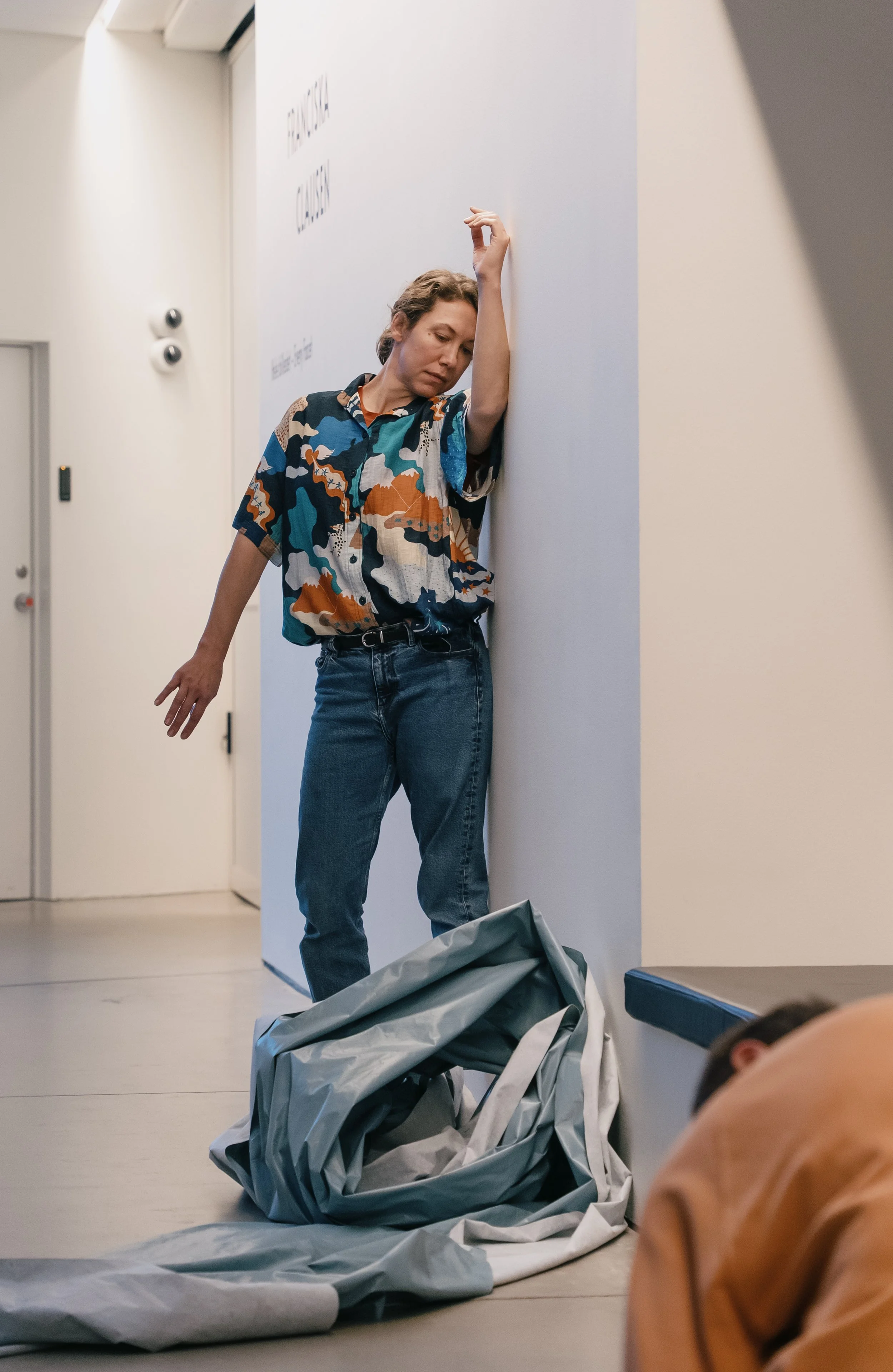
In The Longest Gap the dancers sculpt a continuous live action, traversing the intermediate spaces of the museum and engaging in subtle, fleeting encounters with the public. Moving at a slow pace, as if unwinding through the architecture of the building, their presence quietly reshapes the space and alters the gaze of passing visitors: some cast only a brief glance, questioning the meaning of their presence; others linger, contemplating the slow unfolding of movement and the subtle details, as if observing an exhibited object, a living tableau. The dismantling of the living tableau takes place as the dancers look towards visitors, approach them and initiate a brief conversation about the sense of belonging. This fleeting moment of interaction temporarily disrupts the ´spectator's convention´. The ‘art object’ has turned toward the observer, drawing them into the choreography, if only for a moment. This shift of perception not only reframes the ongoing performance but also transforms the visitor’s very experience of being in the museum space.
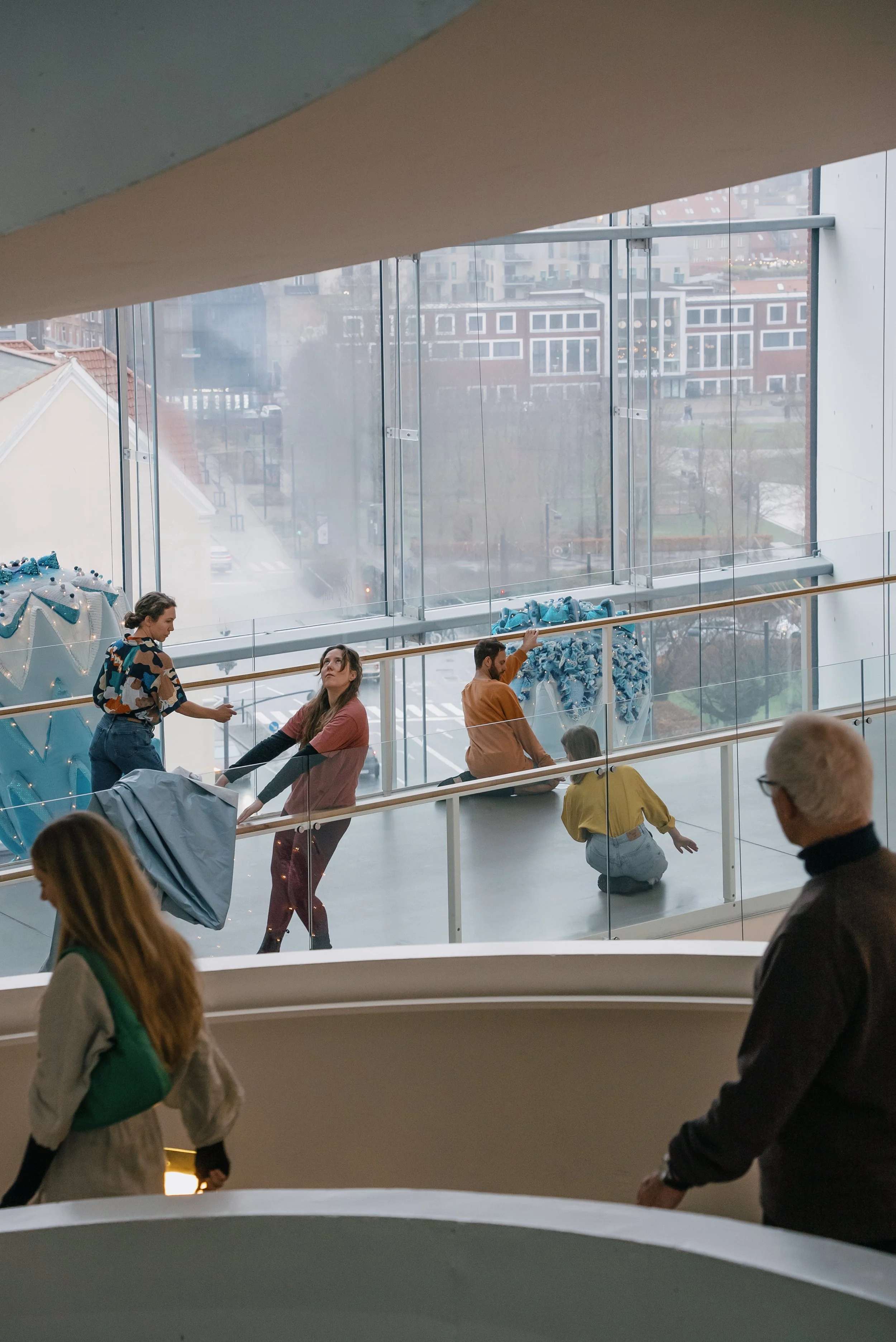
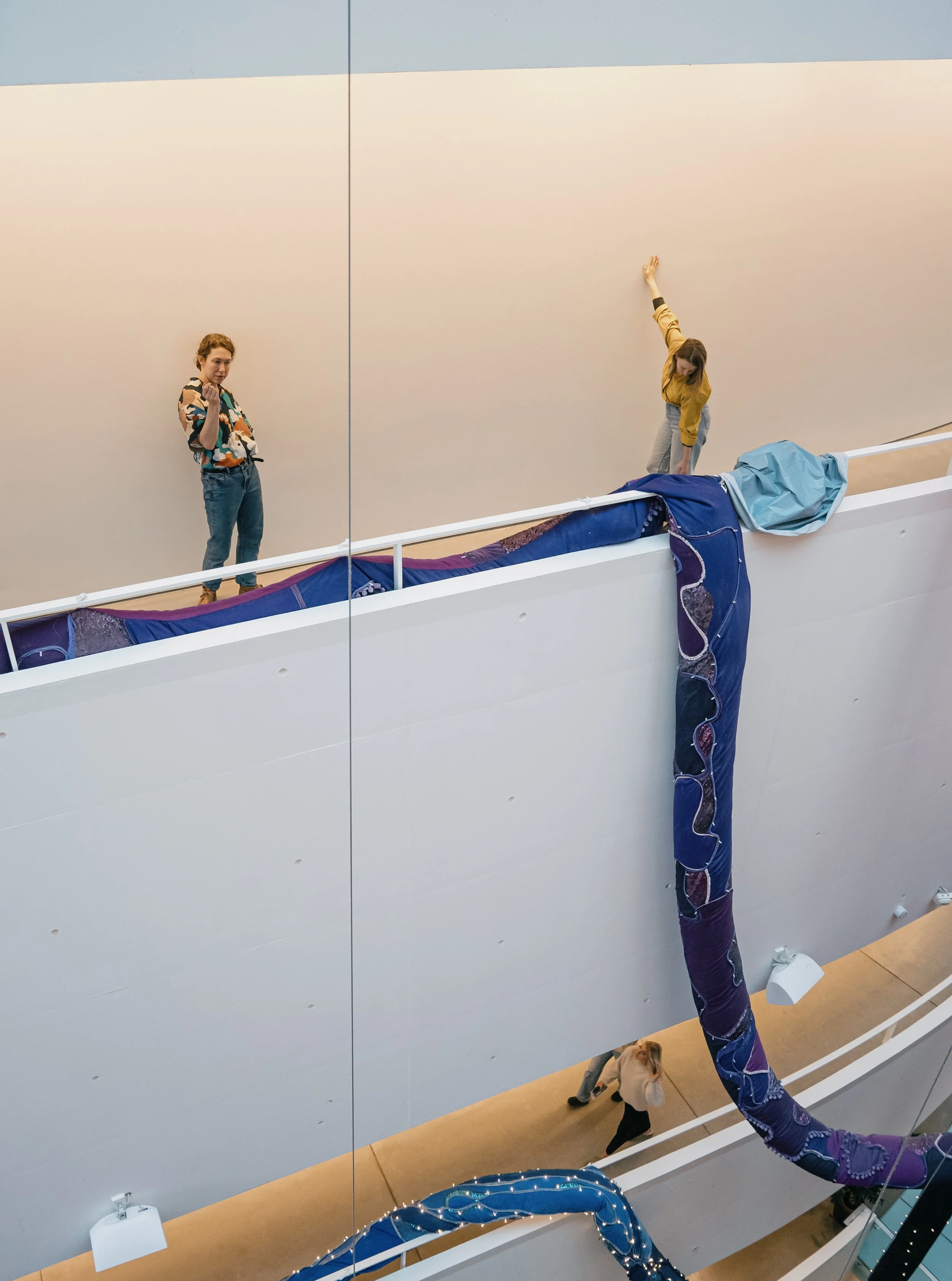
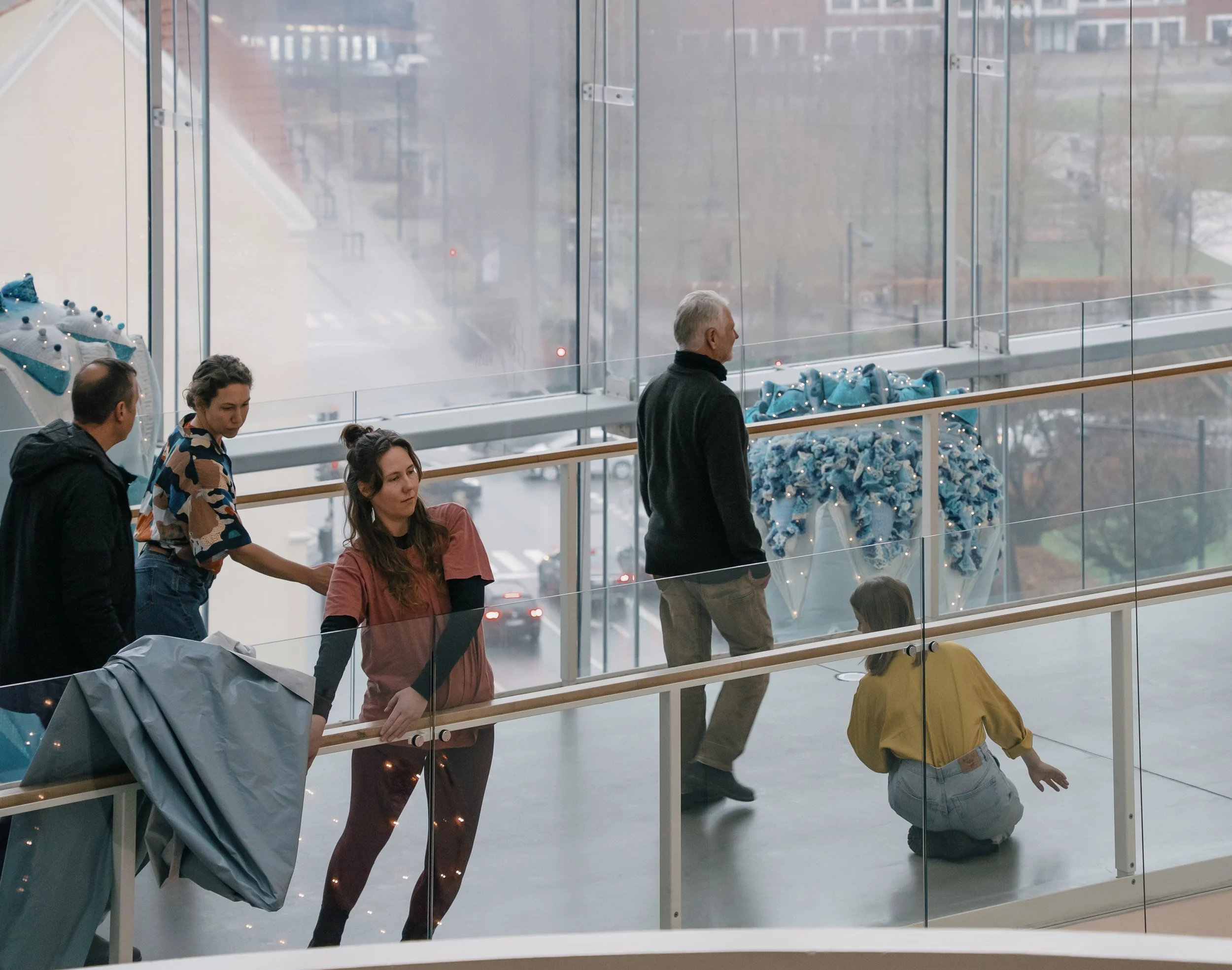
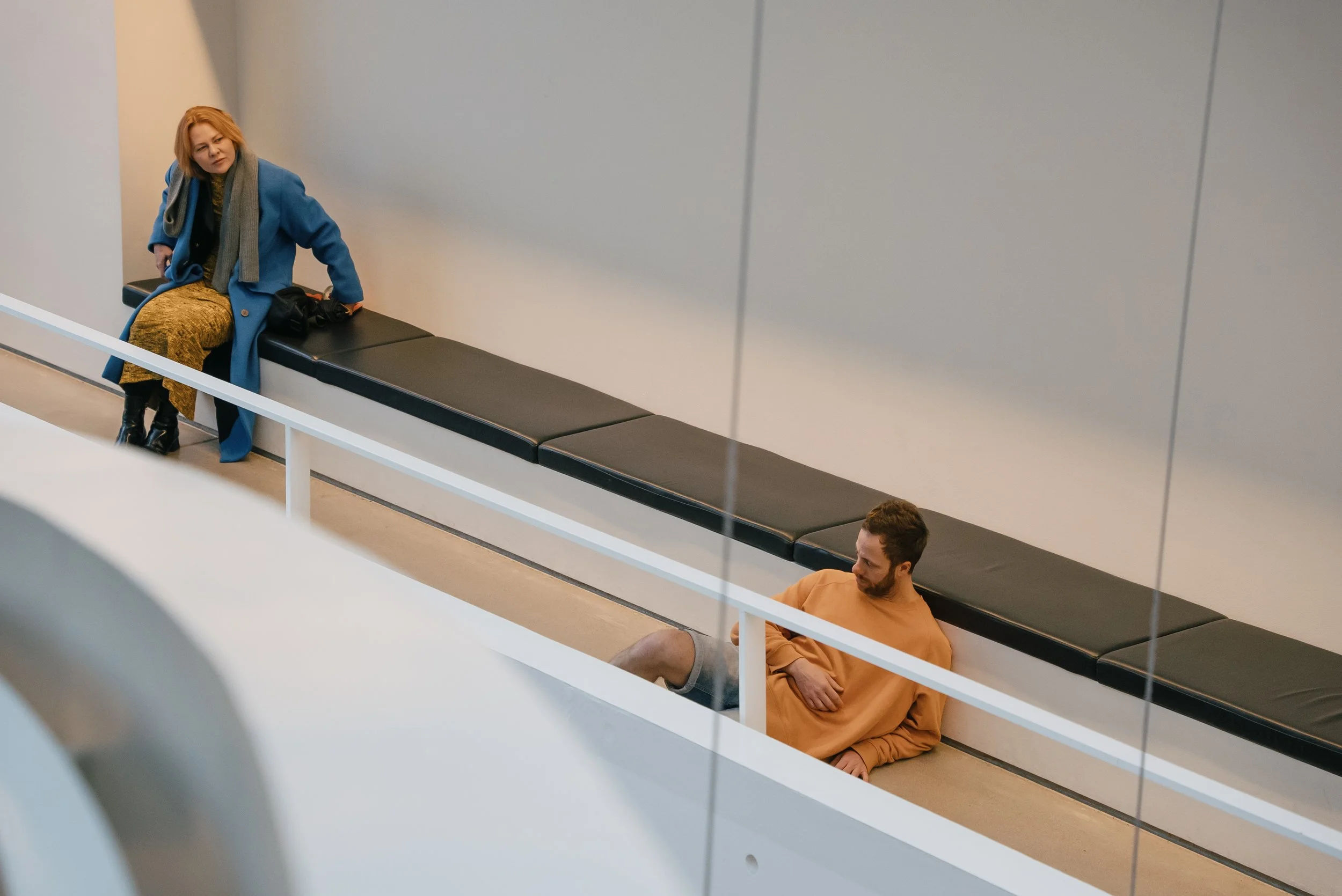
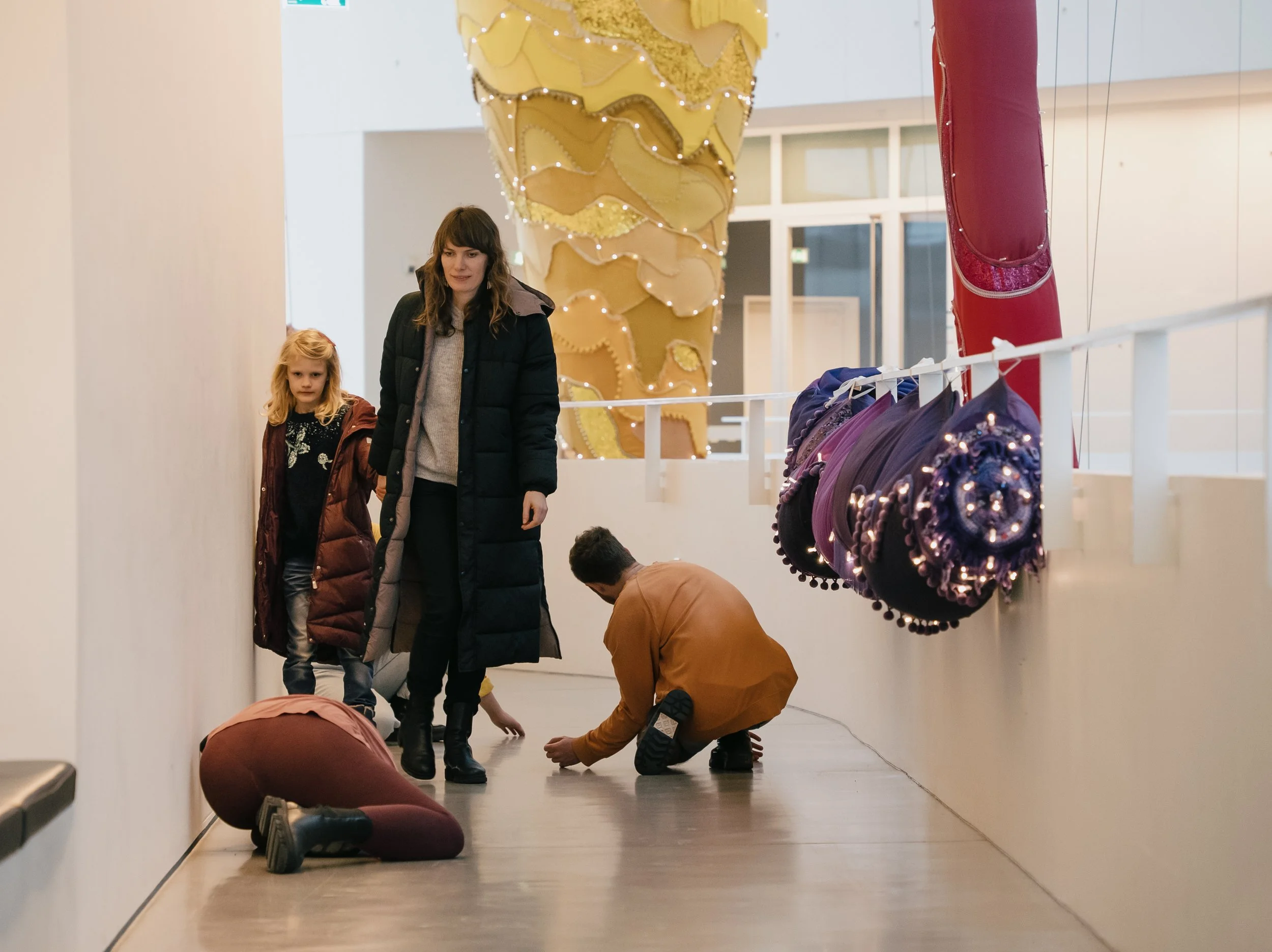
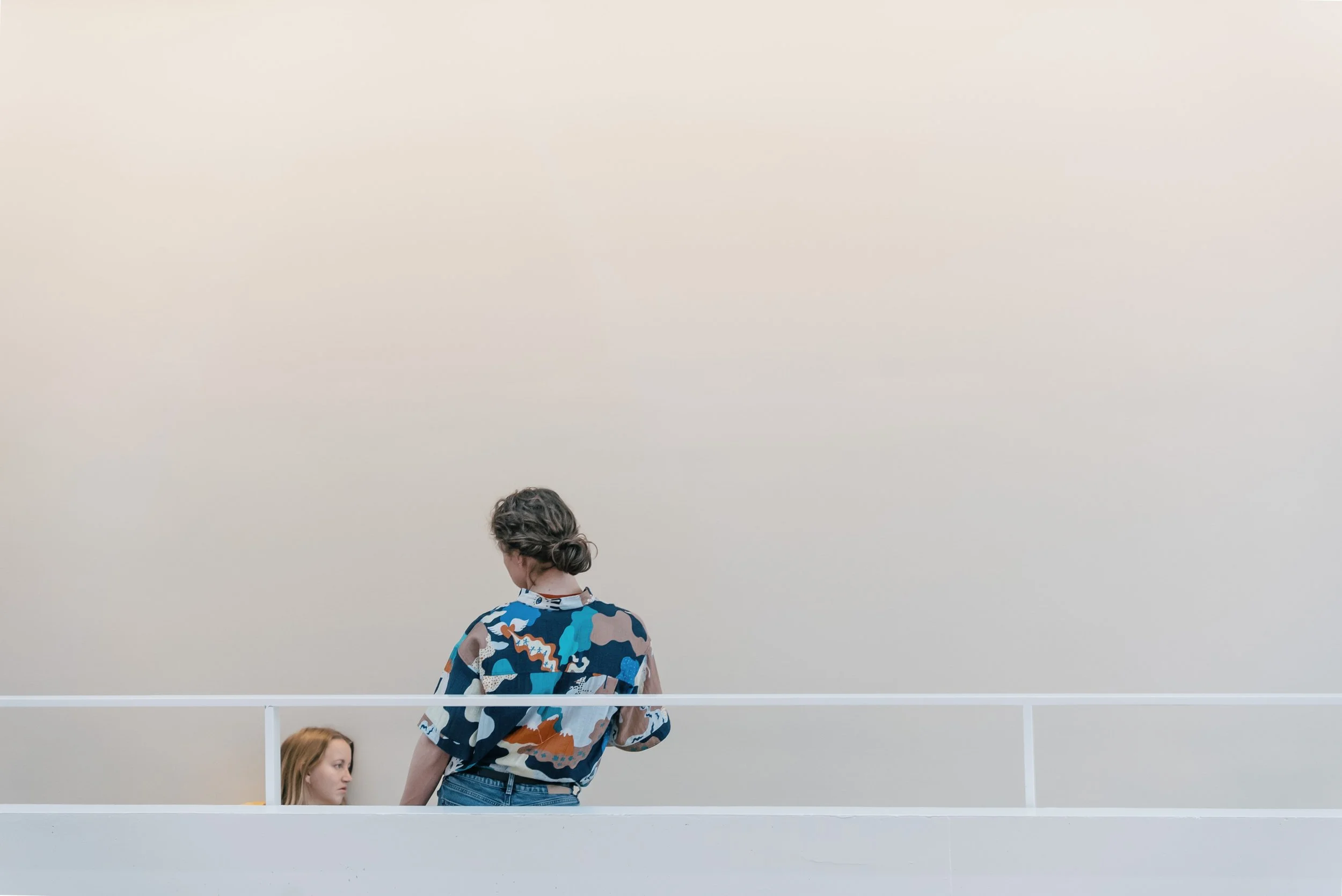
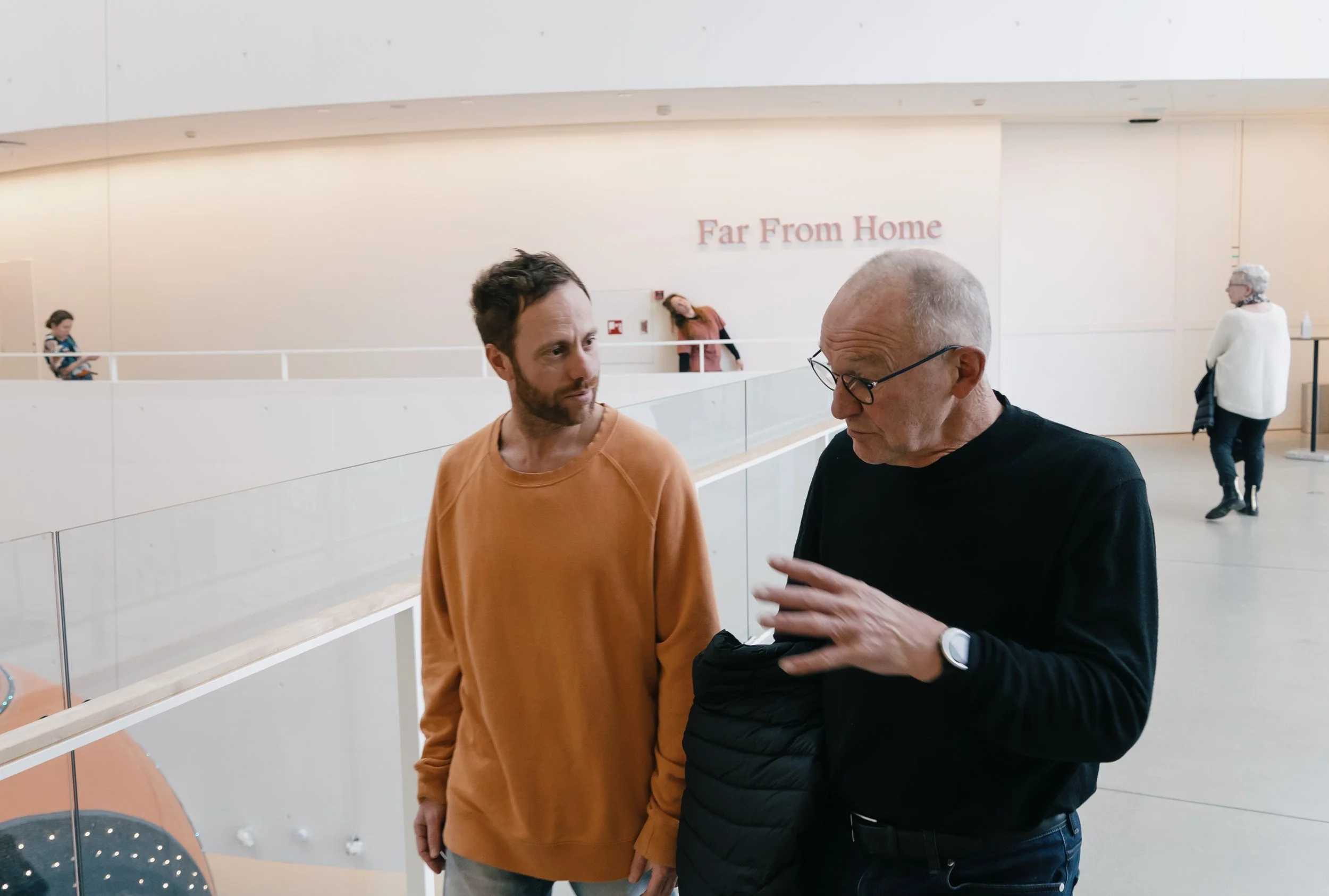
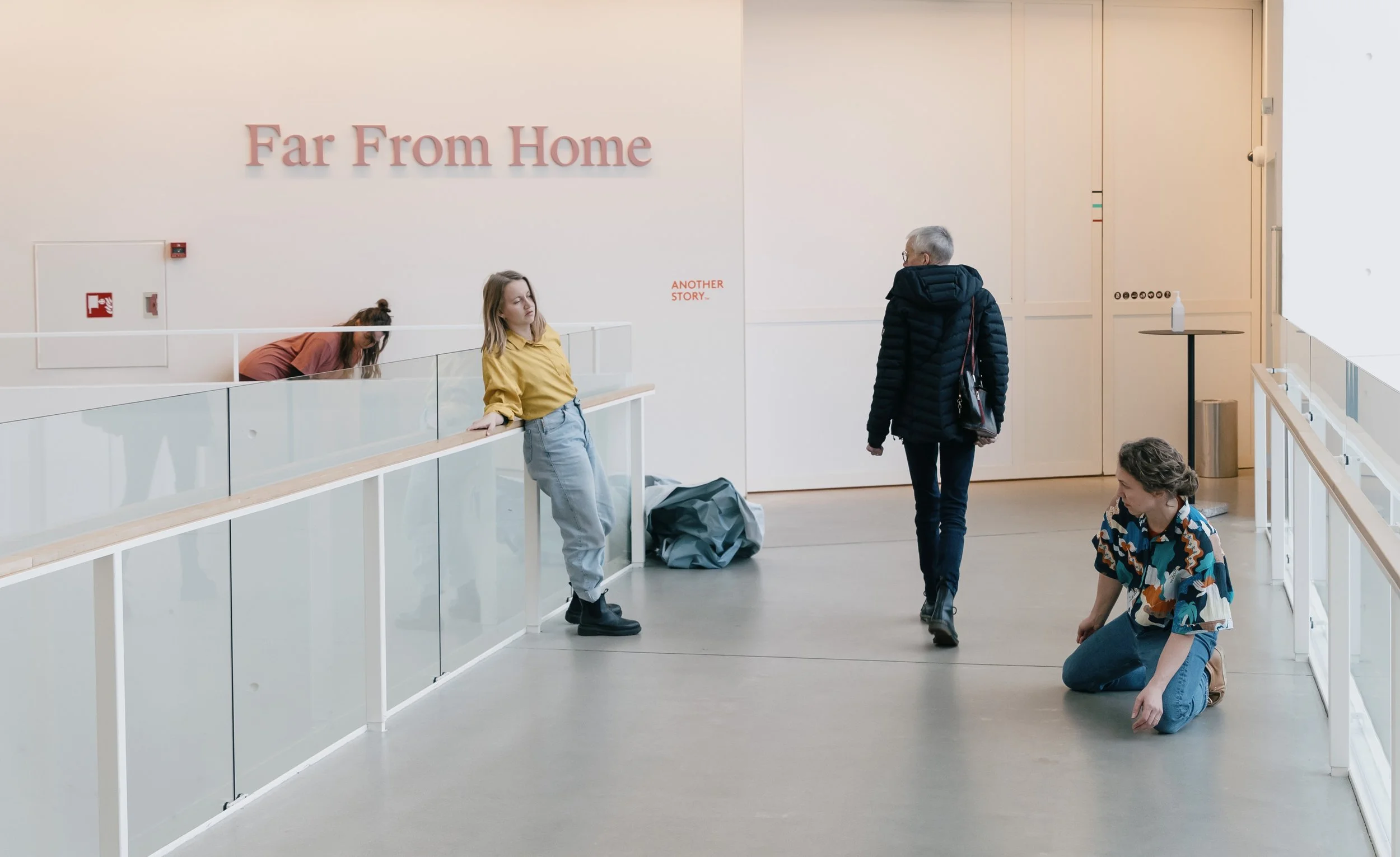
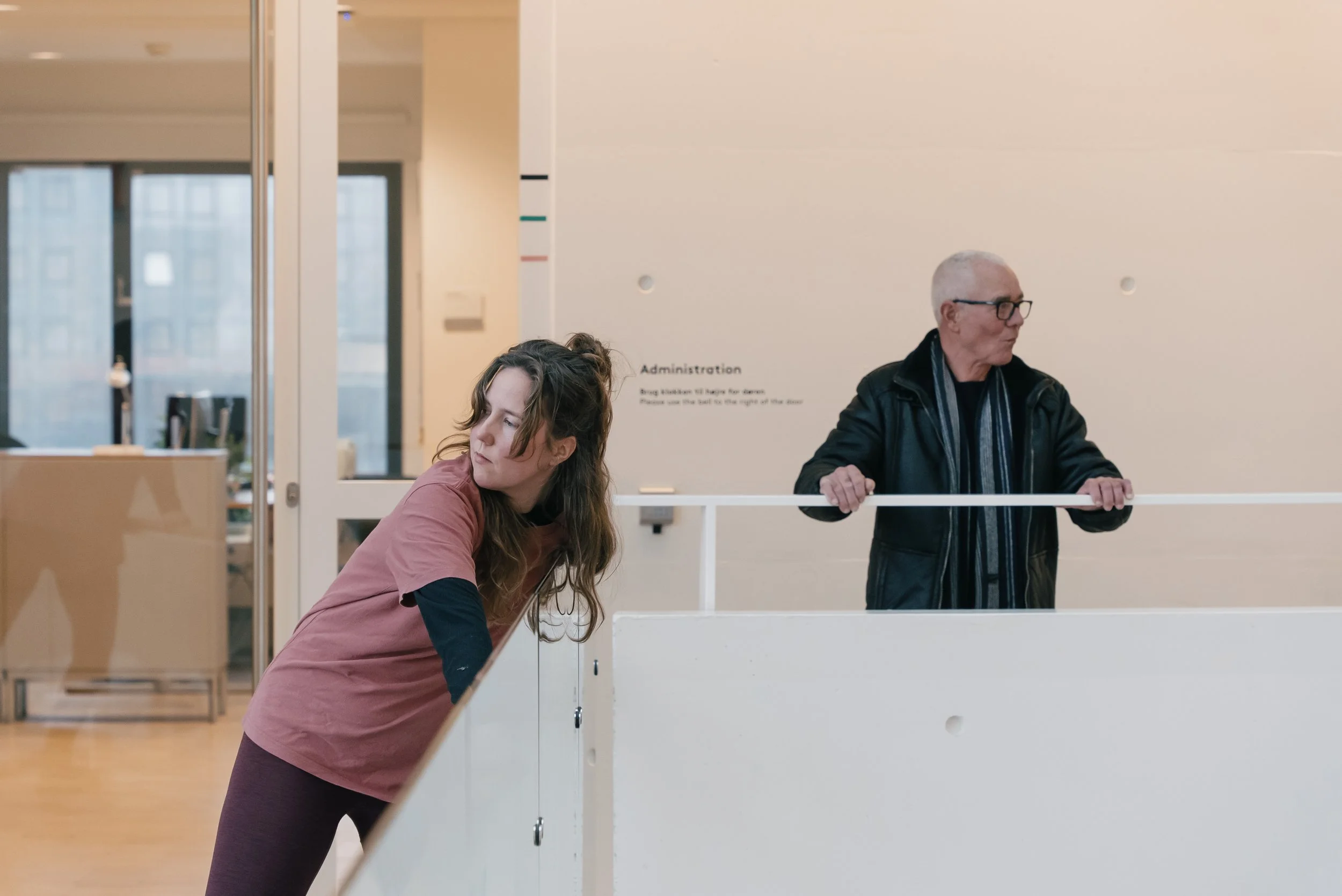
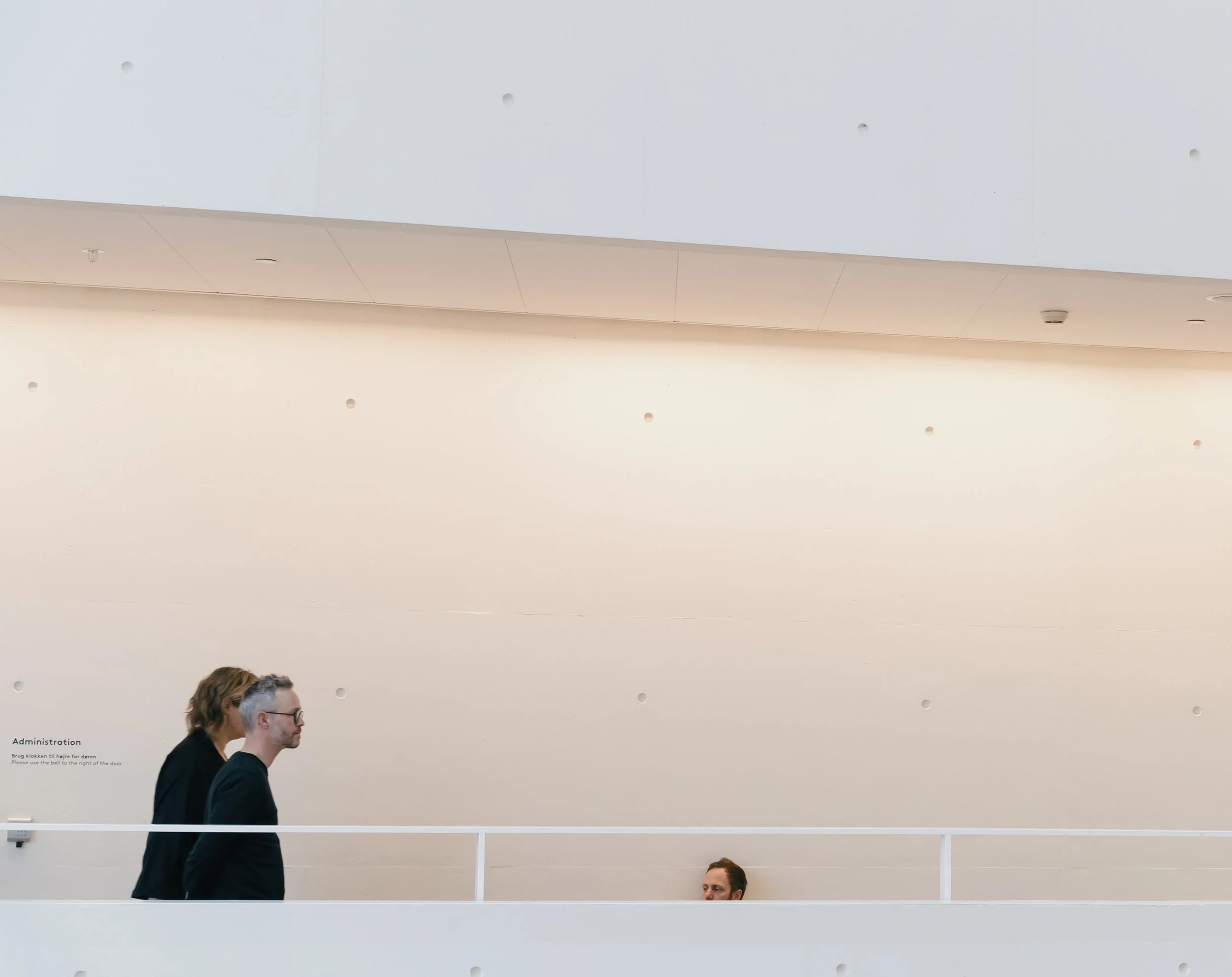
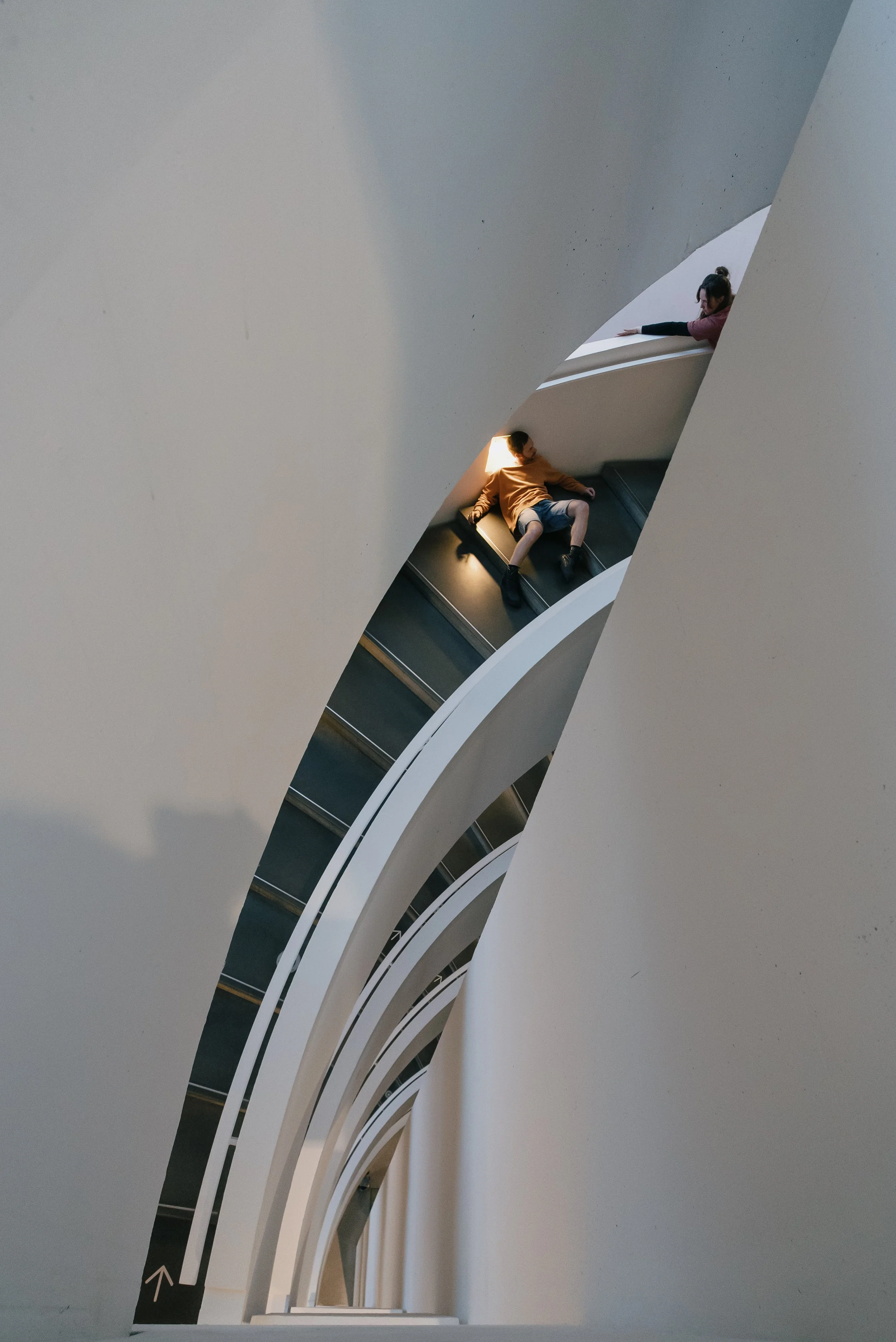
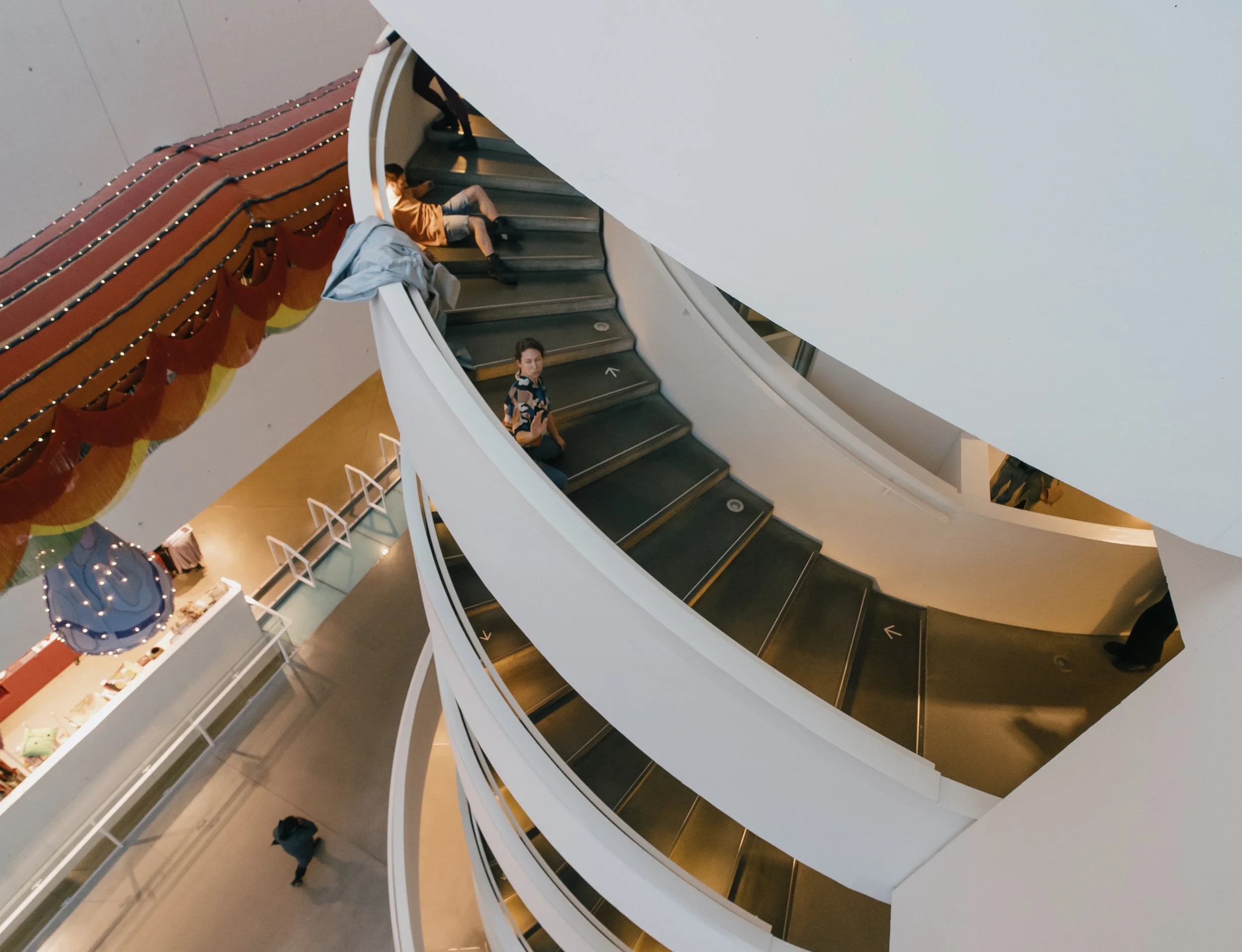
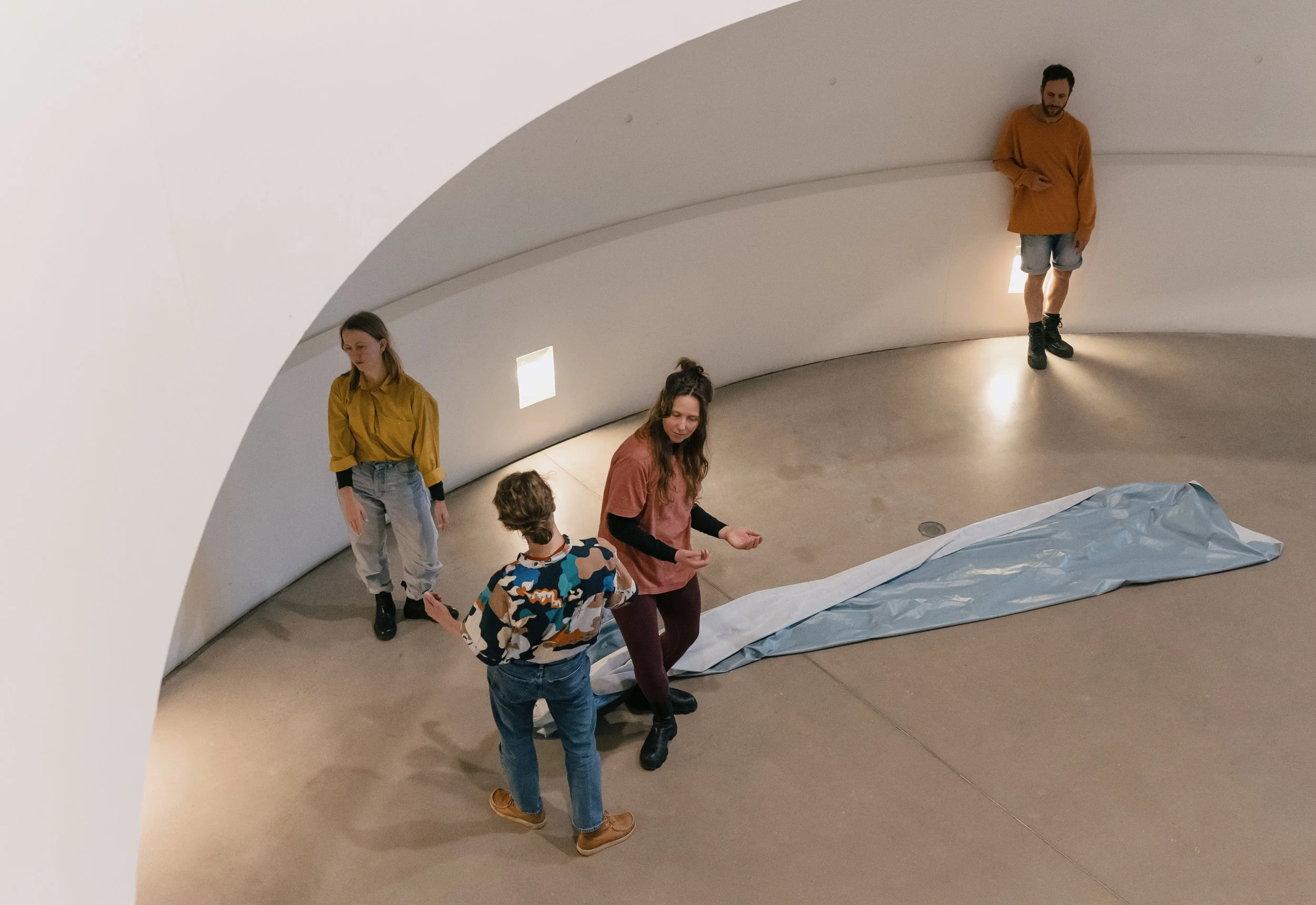
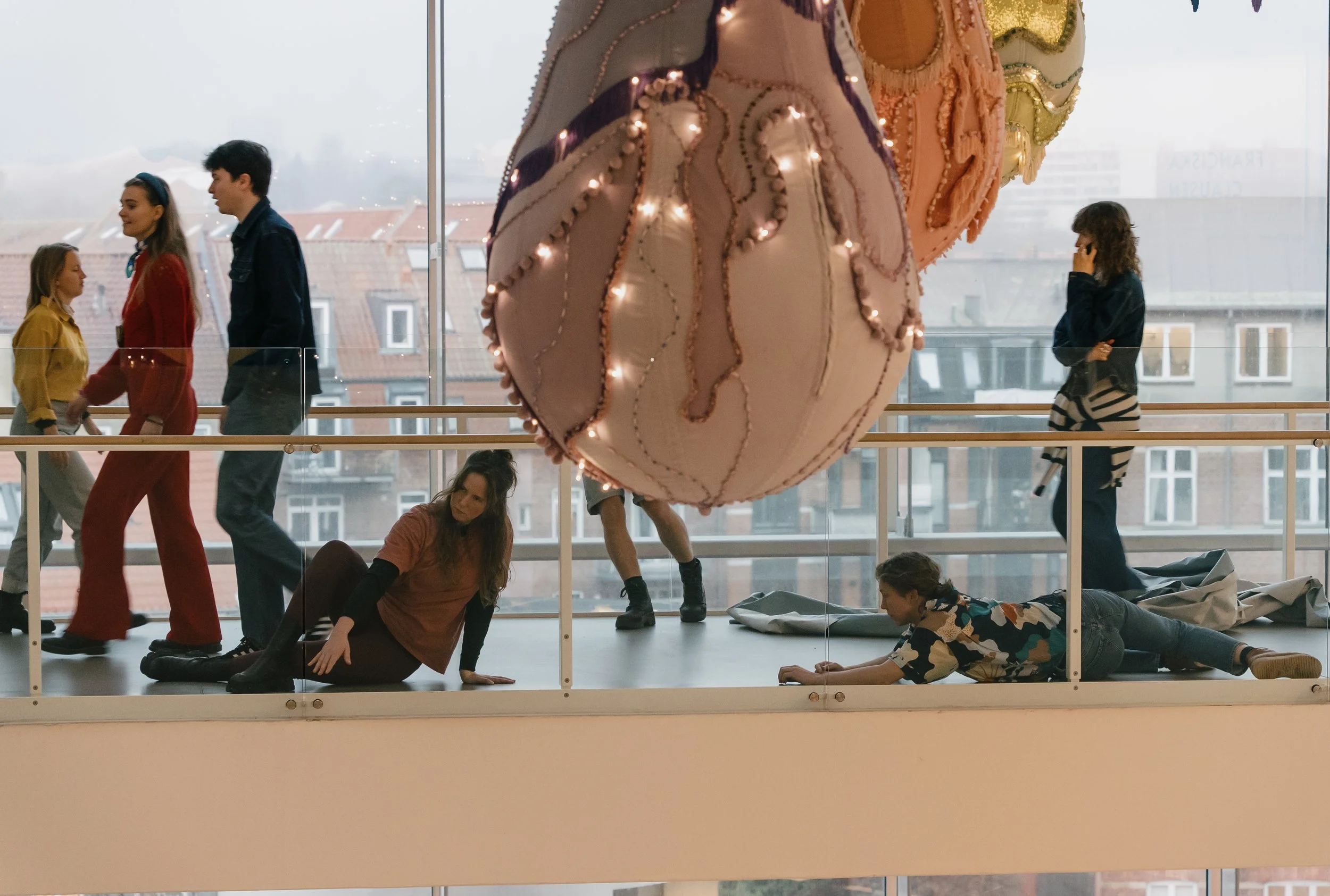
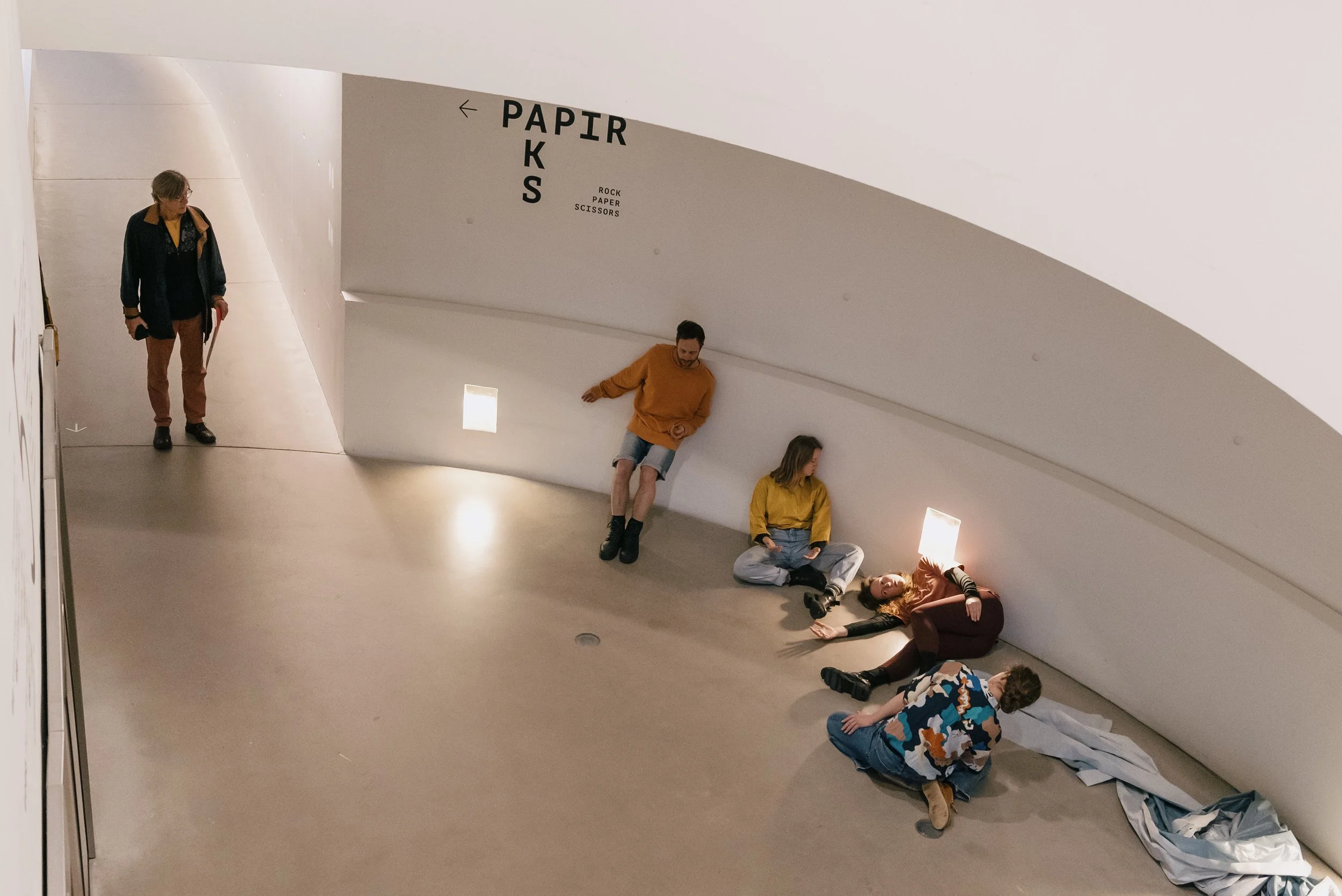
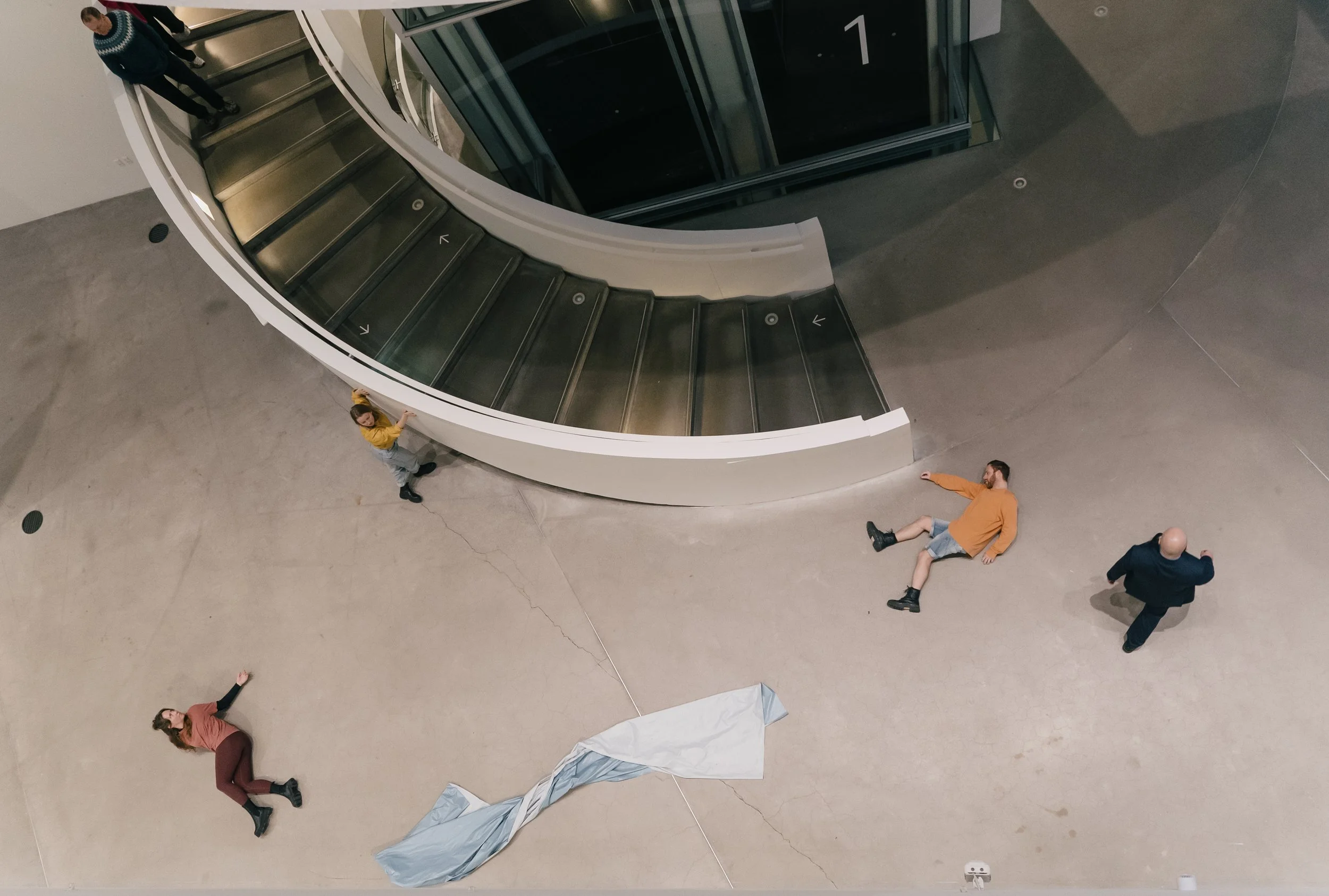
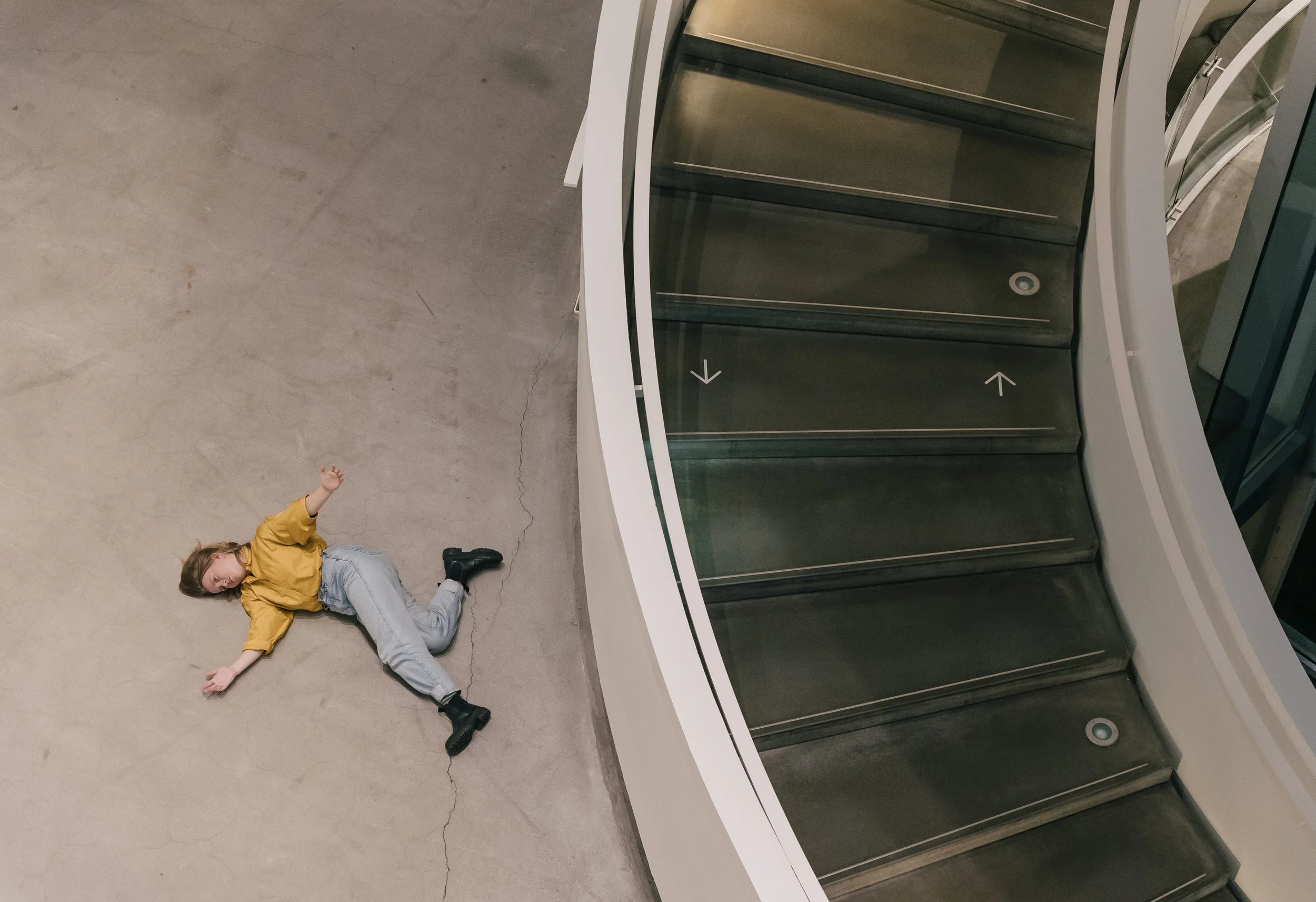
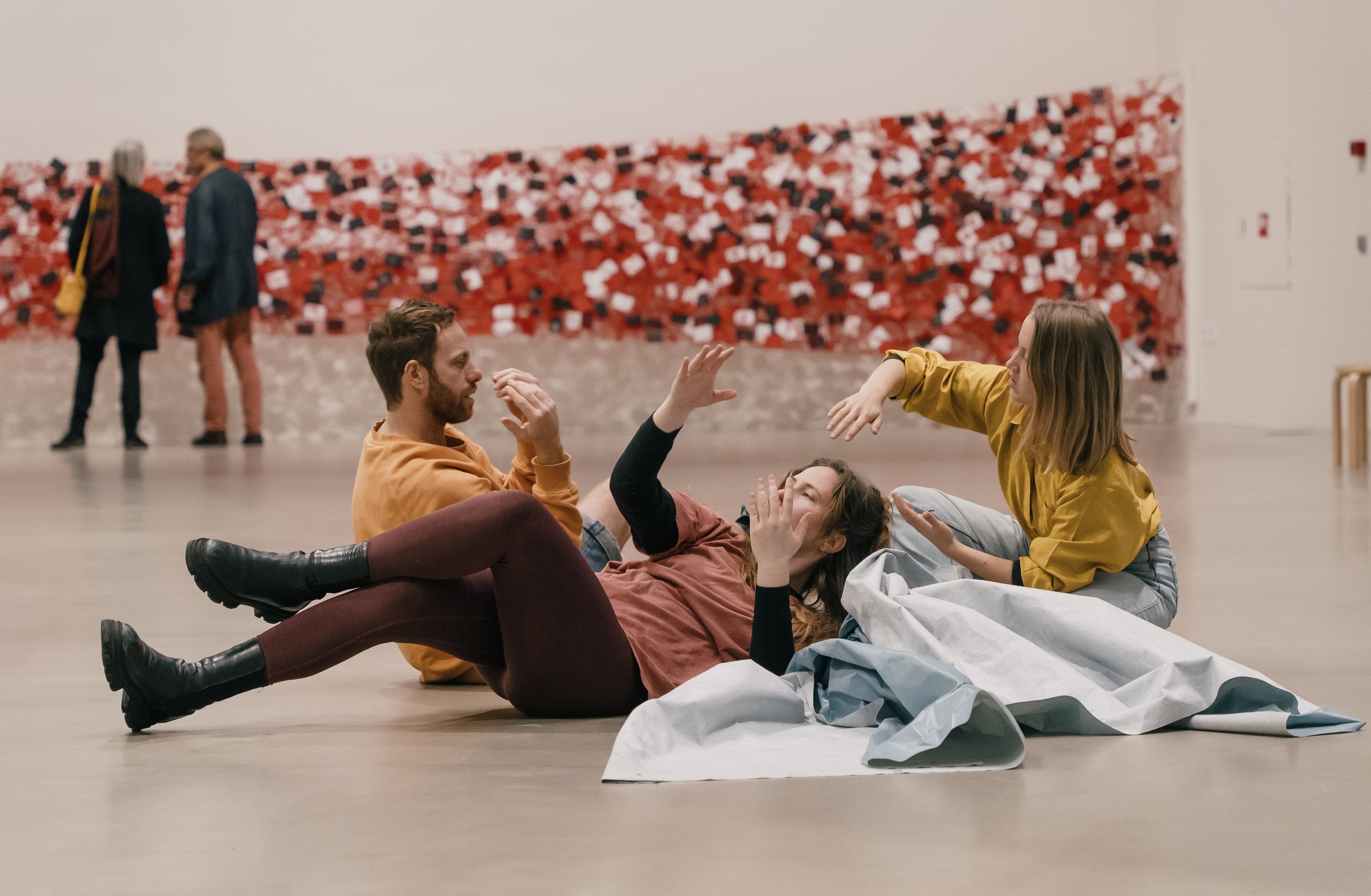
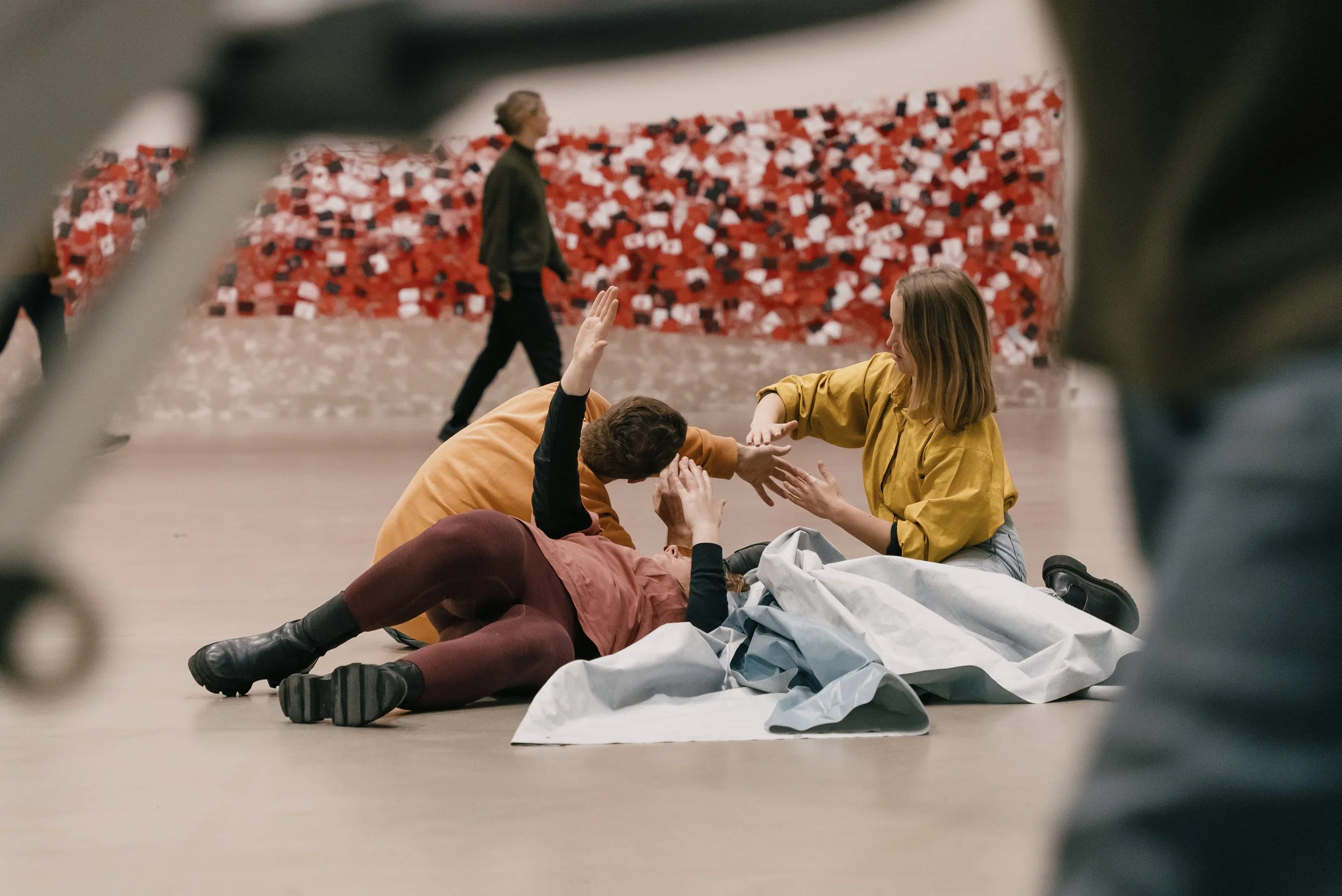
The short film Planet We by filmmaker Karin Grand, captures Mirko Guido, with a group of dancers, transform the strong and concrete architecture of Aros into an imaginary space through their performance. A planet where the most important natural resource seems to be the relational space in and of itself.